
Homeowners who install solar panels often worry about protecting their investment. Solar panels can be costly to replace, and damage caused by storms, fire, or other covered events may result in significant repair expenses. Understanding solar panels house insurance helps you avoid unpleasant surprises and ensures your system stays properly protected.
A typical residential solar panel system costs an average of $30,505 before incentives, according to EnergySage marketplace data. Smaller systems (around 6 kW) start near $15,960. A typical home requires about 12 kilowatts (kW) of solar energy, which costs an average of $30,505 before incentives. Full size systems of between 20 and 30 panels generally cost between $24,000 and $36,000.
Written by Shumail at Insurenestly
Shumail is an independent insurance researcher with over 5 years of experience studying homeowners insurance, solar panel coverage, and related topics. He is not an insurance agent or service provider.
His goal is simple: to gather clear, practical information so regular homeowners like you can understand your options and make better decisions about protecting your solar panels and home. All content on Insurenestly comes from careful research and real world policy details.
Author Profile: Visit Shumail’s Author Page
Does Homeowners Insurance Actually Cover Your Solar Panels?
Solar panels house insurance means protection for your residential solar panel systems against damage from covered events. Most of the time, your solar panels can be covered under your existing homeowners insurance as part of the dwelling coverage. However, you may need to add extra coverage or increase your limits because solar panels have special replacement costs. Always check with your insurer to confirm how your panels are protected.
Solar panels house insurance vs standard homeowners insurance
| Factor | Solar Panels House Insurance | Standard Homeowners Insurance |
|---|---|---|
| Solar panel protection | Included or added coverage | General home protection |
| Replacement considerations | Solar equipment costs included | Standard dwelling coverage |
| Coverage limits | May require updates | Existing limits apply |
| Specialized protection | Sometimes needed | Usually broader coverage |
This table shows the main differences about Solar Panels House Insurance and Standard Homeowners Insurance.
When Your Solar Panels Get Damaged: What’s Actually Covered
Solar panels represent a significant investment for homeowners. Understanding what your insurance actually covers helps protect that investment properly. Solar panels house insurance mainly focuses on sudden damage to your system, but coverage details can vary between policies.
Covered risks for residential solar panels
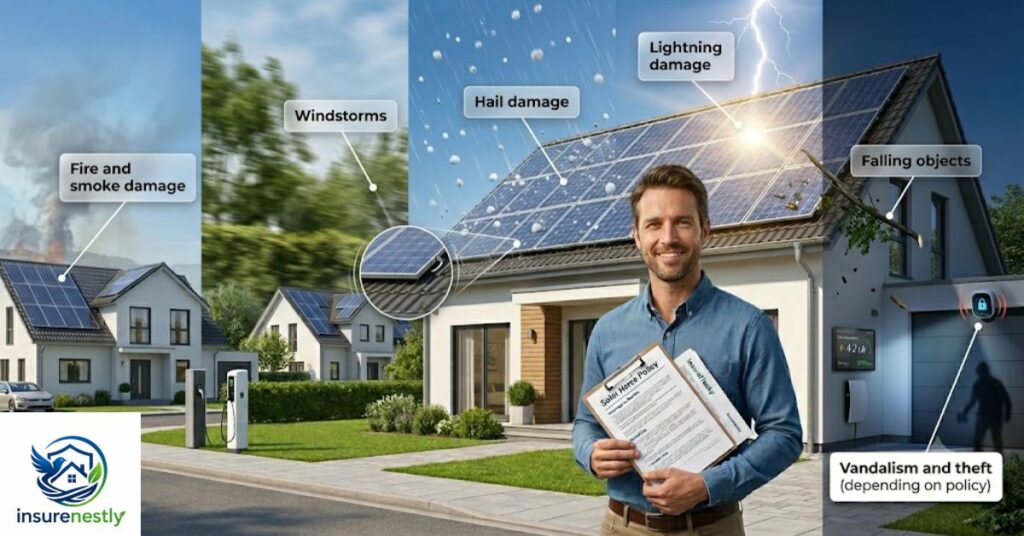
- Fire and smoke damage
- Windstorms
- Hail damage
- Lightning damage
- Falling objects
- Vandalism and theft (depending on policy)
These are the common risks that most homeowners policies cover for solar panels. It is still important to confirm the exact terms with your insurance provider.
Covered vs non covered solar panel damage
| Situation | Usually Covered | Often Excluded |
|---|---|---|
| Fire damage | Yes | No |
| Wind damage | Often | No |
| Hail damage | Often | No |
| Wear and tear | No | Yes |
| Poor installation | No | Yes |
| Manufacturer defects | No | Yes |
This table shows the clear difference between what is normally covered and what is usually not. Sudden accidents are often protected, while gradual damage or installation issues typically are not.
The Coverage Gaps Most Solar Owners Don’t Know About
Solar panels house insurance covers many sudden accidents, but it leaves out several common issues. Knowing these exclusions is important so you do not face unexpected costs later. Many homeowners get surprised when they file a claim and learn what is not included.
Common exclusions homeowners should know
- Normal wear and tear
- Improper maintenance
- Faulty workmanship
- Manufacturer defects
- Intentional damage
- Unapproved installations
These are the most frequent things that standard insurance does not pay for. Always check your policy details carefully.
Insurance coverage vs warranty protection
| Issue | Insurance Coverage | Manufacturer Warranty |
|---|---|---|
| Storm damage | Usually covered | No |
| Fire damage | Usually covered | No |
| Product defect | Usually excluded | Often covered |
| Equipment failure | Often excluded | May be covered |
This table makes the difference easy to understand. Insurance handles sudden damage from outside events, while the manufacturer warranty often covers problems with the product itself.
How Much Coverage Is Enough for Solar System?
Deciding the right amount of coverage for your solar panels is important because they are a costly investment. You want enough protection to replace the system if something goes wrong. Too little coverage can leave you paying big out of pocket expenses. It is best to review your needs carefully with your insurance provider.
Replacement cost vs actual cash value
| Factor | Replacement Cost | Actual Cash Value |
|---|---|---|
| Pays for new equipment | Yes | No |
| Depreciation deducted | No | Yes |
| Financial protection | Higher | Lower |
| Premium cost | Usually higher | Usually lower |
This table shows why most homeowners prefer replacement cost coverage for solar panels. It pays to install new equipment without subtracting for age or wear.
Factors affecting coverage needs
| Factor | What It Means in Practice |
|---|---|
| Solar system size | A 6 kW system starts at ~$15,960. A 12 kW system averages $30,505 . Your coverage limit must match whichever you install. |
| Property location | Oklahoma homeowners already pay $7,255/yr base. A solar system there adds hail endorsement costs on top. |
| Local weather risks | Kansas and Oklahoma face the highest hail risk in the U.S. Some insurers now exclude wind/hail for solar in these states requiring a paid endorsement. |
| System age | Older systems may only qualify for actual cash value coverage not replacement cost meaning depreciation is deducted from your payout. |
The Real Cost of Insuring Solar Panels
Adding solar panels increases your home’s replacement value, which may require you to raise your dwelling coverage limit. According to EnergySage, For homeowners who do see an increase in their insurance costs after installing solar panels, the monthly payment can go up by as little as $15 or as much as a few hundred dollars, depending on their situation. However, your premium will likely stay the same if the replacement value of your home with solar panels remains under your existing coverage limit. This means many homeowners pay nothing extra at all it entirely depends on your current policy limits.
Factors that affect solar panel insurance premiums
- Solar system value
- Geographic location
- Claims history
- Coverage limits
- Deductible amount
- Weather exposure
These factors directly influence what you pay. Homes in high risk weather areas or with expensive solar systems usually face higher premiums.
Home without solar panels vs home with solar panels
| Factor | Home Without Solar Panels | Home With Solar Panels |
|---|---|---|
| Property value | Lower | Potentially higher |
| Replacement cost | Lower | Higher |
| Insurance premium trend | Lower | May be higher |
| Coverage needs | Standard | Updated limits may be needed |
This table highlights the main differences. Adding solar panels often means you need to review and adjust your insurance.
Owned solar panels vs leased solar panels
| Factor | Owned Panels | Leased Panels |
|---|---|---|
| Insurance responsibility | Usually homeowner | May be provider responsibility |
| Coverage needs | Higher homeowner involvement | Depends on lease agreement |
| Claim handling | Homeowner policy | Shared responsibility possible |
This table shows how ownership changes things. If you own the panels, you carry most of the responsibility. If your solar panels are leased or under a Power Purchase Agreement (PPA), the leasing company typically owns the system and carries their own insurance on the equipment. This means you are not responsible for insuring the panels themselves. However, you are still responsible if the panels cause damage to your roof or home structure. Before signing any lease, confirm three things: who covers storm or fire damage to the panels, who handles removal and reinstallation if your roof needs repair, and whether your homeowners policy needs any update at all.
Solar Panels House Insurance Price Comparison
Comparing insurance prices with and without solar panels helps you understand the real cost difference. Adding solar panels can change your premiums because they increase the value of your home. Many homeowners want to know exactly how much extra they might pay and what they get in return.
Standard home insurance vs home insurance with solar panels
| Scenario | Verified Figure |
|---|---|
| Solar value under coverage limit | $0/month |
| Small/medium system, limit updated | +$15 to $50/month |
| Large system, high risk area | +few hundred dollars/month |
| Standalone separate solar policy | No confirmed figure available |
How Does Your Location Affect Solar Panel Insurance Costs?
| State | Verified Annual Premium | Verified Monthly |
|---|---|---|
| Oklahoma | $7,255/yr | ~$605/mo |
| Kansas | $5,455/yr | ~$455/mo |
| Texas | $4,915/yr | ~$410/mo |
| New Jersey | $1,480/yr | ~$123/mo |
Base premium figures verified from NerdWallet’s 2026 analysis of 270 million+ rates across 100+ insurance companies.
How Does the Solar Panels House Insurance Claim Process Work?
Filing a solar panel insurance claim has a few important differences compared to a standard home claim. First, document your system’s production records before and after the damage insurers often request this to assess performance loss. Second, your insurer may send a specialist adjuster who evaluates not just panel damage but also inverter and wiring damage, which can be costly and is often overlooked. Third, always get a repair estimate from a certified solar installer, not a general contractor, as insurers tend to trust solar specific quotes more.
Step by step claim process
| Step | What To Do | Solar Specific Tip |
|---|---|---|
| Damage occurs | Photograph everything immediately | Include inverter and wiring, not just panels |
| Report claim | Call insurer within 24–48 hours | Mention it is a solar system specifically |
| Submit evidence | Photos + installer repair estimate | Use a certified solar installer quote |
| Inspection | Adjuster reviews damage | Ask if they have solar experience |
| Settlement | Repair or replacement payment | Confirm replacement cost, not cash value |
Why are solar panel claims denied?
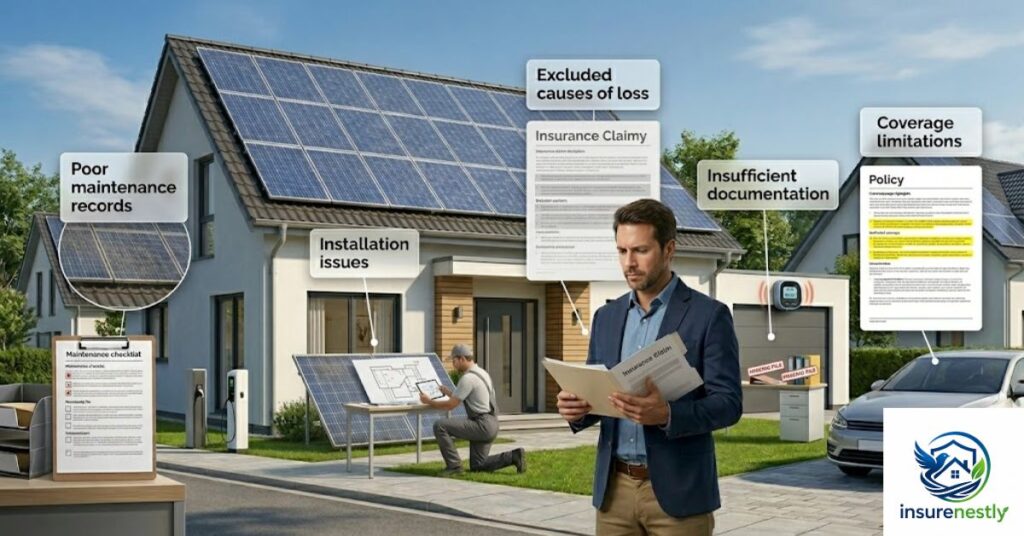
- Excluded causes of loss
- Poor maintenance records
- Installation issues
- Insufficient documentation
- Coverage limitations
These are the most common reasons solar panel claims get denied. Good record keeping and understanding your policy can help you avoid these problems.
5 Insurance Mistakes That Cost Solar Homeowners Thousands
Many homeowners install solar panels but forget to update their insurance properly. This can lead to big problems if damage happens. After researching insurance for solar homes, I have seen the same mistakes repeated often. Avoiding them helps protect your investment.
Mistakes to avoid after installing solar panels
- Not notifying the insurance company
- Failing to increase coverage limits
- Ignoring policy exclusions
- Assuming warranties replace insurance
- Not documenting installation costs
These mistakes are easy to make but can leave you underprotected. Take action right after installation to avoid issues later.
Underinsured vs adequately insured solar systems
| Factor | Underinsured System | Adequately Insured System |
|---|---|---|
| Financial protection | Lower | Higher |
| Out of pocket costs | Higher | Lower |
| Replacement support | Limited | More complete |
This table shows why proper coverage matters. An underinsured system can cost you thousands if something goes wrong, while adequate coverage gives better protection.
Conclusion
Solar panels may be covered under homeowners insurance, but coverage details vary by policy and insurance company. Homeowners should review their policy limits after installation and make necessary updates to protect their investment properly. Understanding exclusions, warranties, and claim procedures helps avoid coverage gaps and gives you better peace of mind.
Disclaimer
The information in this article is for educational purposes only. It is based on general knowledge about solar panels house insurance and homeowners policies. Insurance rules, coverage, and requirements can differ greatly by state, insurance company, policy type, and individual situation.
This article is not insurance advice, financial advice, or a substitute for talking to a licensed insurance agent or professional. Always review your own policy documents and consult qualified experts before making any decisions about your solar panel coverage.
Reference And Sources
Source: energysage.com
Sources: This Old House
FAQs
Do Solar Panels Affect Your Homeowners Insurance?
Yes, but only if your solar system pushes your home’s replacement cost above your current coverage limit. Since solar systems cost an average of $29,649 in 2025, your insurer may require you to raise your coverage limit. If your existing limit already covers the added value, nothing changes. The most important step: notify your insurance provider before or immediately after installation to ensure adequate coverage.
Will My Homeowners Insurance Go Up With Solar Panels?
Not always. If you update your coverage limit to reflect the panels, your monthly premium can rise by as little as $15 or up to a few hundred dollars, depending on system size and insurer. If your existing limit already covers the new replacement value, your premium stays the same.
Which Insurance Denies the Most Claims?
More than most homeowners expect. According to Weiss Ratings 2024 data, Allstate led all major carriers with 50.9% of claims closed without payment, followed closely by USAA, while the national average across all carriers was 42%.
What Statements Can Hurt Your Homeowners Insurance Claim?
Watch your words carefully. Telling the adjuster your home was “flooded” by a storm could invalidate your coverage, even when wind or rain caused the actual damage. Never speculate about damage cause, never admit fault, and never accept the first settlement offer before the full extent of damage is confirmed. For solar claims specifically, never tell the adjuster the panels were already loose or damaged before the storm that single statement can be used to classify the damage as a pre existing condition and deny your entire claim.
Why Do Insurance Companies Not Like Solar Panels?
Because they add multiple risks at once. Poor grounding, defective installation, and manufacturing defect claims have pushed underwriters to compile lists of module manufacturers they will not insure. Solar panels also increase replacement cost and weather exposure, making insurers cautious especially in hail prone and hurricane affected states like Kansas, Oklahoma, and Florida.

Shumail is an independent insurance researcher and content writer who researches publicly available insurance information and explains coverage, costs, and insurance concepts in simple language. InsureNestly provides educational and informational content only and does not sell insurance or provide insurance advice.