Last Updates: 06-June-2026
Mobile home insurance is very important for Florida homeowners. Manufactured and mobile homes need strong protection because of the state’s tough weather. The right policy helps cover repairs or replacement after damage so you are not left with huge costs after a storm.
Florida faces many risks like hurricanes, strong windstorms, flooding, and severe weather. These events can cause serious damage to mobile homes. Insurance costs vary based on your location, home age, coverage choices, and insurer guidelines.
Written by Shumail at Insurenestly
Shumail is an independent insurance researcher and content writer at insureNestly. He studies information from various insurance companies, reports, and reliable sources to create simple and helpful articles for homeowners.
Shumail is not an insurance agent or service provider and does not offer any financial or insurance services. He does not sell insurance policies. His only goal is to share clear, research based information so readers can better understand their options.
Author Profile: Visit Shumail’s Author Page
What Is Mobile Home Insurance Florida?
Mobile home insurance in Florida protects manufactured and mobile homes from damage and loss. It covers the home structure, your belongings, and liability if someone gets hurt on your property. This insurance helps homeowners recover financially after storms, fires, or other issues common in Florida.
Coverage options often differ from traditional homeowners insurance because mobile homes have special risks. Many standard policies do not fully cover them, so you need a specialized policy designed for factory built homes.
Mobile home insurance vs standard homeowners insurance
| Factor | Mobile Home Insurance | Standard Homeowners Insurance |
|---|---|---|
| Property type | Manufactured/mobile homes | Traditional site built homes |
| Risk considerations | Weather and mobility factors | Standard residential risks |
| Coverage structure | Specialized policies | Traditional homeowners policies |
| Premium factors | Home age, location, condition | Property value and location |
Why mobile homes require specialized coverage
- Lighter construction materials: Mobile homes are factory built with lighter frames, making them more vulnerable to high winds and storm surge. Florida alone accounts for 41% of all landfalling U.S. hurricanes, which makes this a serious concern for mobile homeowners.
- High hurricane frequency: Florida averages 0.73 hurricanes per year, and every part of its coastline has been hit by at least one hurricane since 1850. Mobile homes face much higher wind damage risk than site built houses during these storms.
- Recent real damage evidence: Hurricane Helene in 2024 flooded the Crystal Bay Mobile Home Club in Palm Harbor by several feet. More than 1,400 Pinellas County homes, many of them mobile, were officially declared substantially damaged after the 2024 hurricane season.
- Tie down and anchoring requirements: Florida law requires mobile homes to be secured to the ground using anchor and tie down systems. Many insurers check for proper anchoring before they issue or renew a policy. Homes without it face a higher risk of overturning in strong winds.
- Home age: Older mobile homes often lack modern wind resistant features, which makes them more expensive to insure and harder to qualify for standard coverage.
- Flood zone location: Many Florida mobile home parks sit in low lying coastal flood zones, as seen clearly in Pinellas County during Hurricane Helene. This makes separate flood insurance especially important alongside a standard policy.
Source: Florida 41% hurricanes stat
Why Is Mobile Home Insurance Important in Florida?
Florida’s weather makes mobile home insurance very important. Manufactured homes face higher risks than regular houses, and having the right coverage helps protect your investment when storms hit. Without proper insurance, one bad storm can leave you with major losses.
Common risks Florida homeowners face
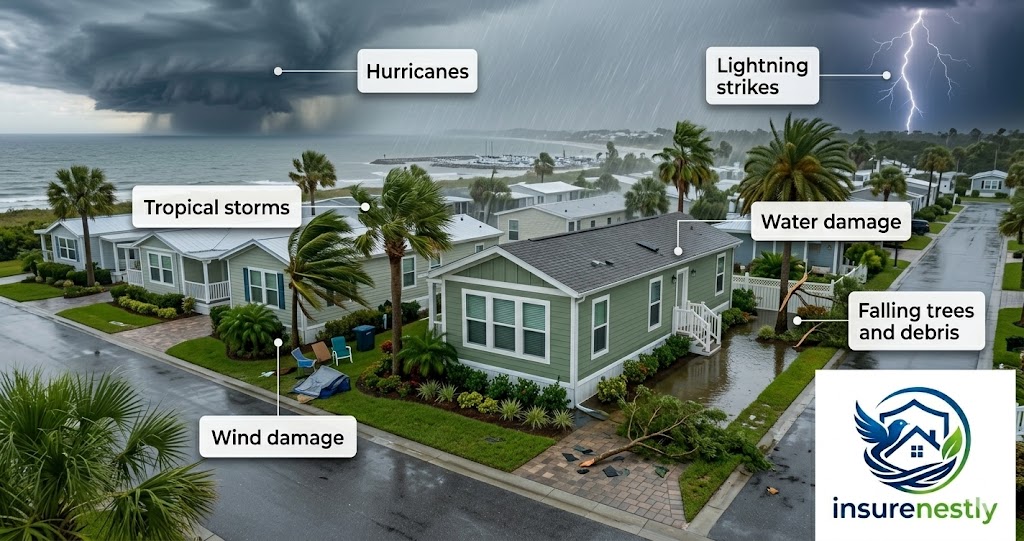
- Hurricanes: Strong winds and heavy rain can cause serious structural damage.
- Tropical storms: Even weaker storms bring flooding and wind issues.
- Wind damage: High winds can tear off roofs or siding on mobile homes.
- Lightning strikes: Frequent lightning can start fires or damage electrical systems.
- Water damage: Heavy rains and flooding often affect homes in low lying areas.
- Falling trees and debris: Strong storms knock down trees that can crush mobile homes.
What Does Mobile Home Insurance Florida Typically Cover?
Mobile home insurance in Florida is primarily available through specialty carriers, and coverage options vary by insurer and location. The most widely available options include:
Core coverages commonly included
- Foremost: Review available coverage options, policy exclusions, and insurer complaint information before choosing a policy.
- American Modern: Has been insuring mobile homes since 1965 and offers coverage for rental and seasonal homes as well.
- Sutton National: Check the insurer’s complaint history and available coverage details before choosing a policy.
- Citizens Property Insurance Corporation: Florida’s state backed insurer of last resort providing coverage when private insurance is unavailable.Available to homeowners unable to secure coverage through private insurers, though premiums are generally higher and coverage is limited.Assurant: Offers customizable policies covering wind, fire, and theft.
Core coverages commonly included
| Coverage Type | Purpose |
|---|---|
| Dwelling coverage | Protects the structure |
| Personal property coverage | Covers belongings |
| Liability protection | Covers legal responsibility |
| Additional living expenses | Helps with temporary housing costs |
Optional coverages homeowners may consider
- Flood insurance: Standard mobile home insurance policies in Florida do not cover flood damage. Standard mobile home insurance policies in Florida do not cover flood damage, so a separate flood insurance policy is needed, usually through the National Flood Insurance Program (NFIP) managed by FEMA. This is especially important for mobile homes in coastal and low-lying areas. Flood insurance is also becoming mandatory for more policyholders insured through Citizens, Florida’s insurer of last resort, under a phased schedule based on the home’s dwelling coverage value.
- Windstorm endorsements: Extra protection against strong winds and hurricanes.
Florida law (Florida Statute §627.712) requires that any insurer offering residential property insurance including mobile home policies must provide windstorm coverage. This means wind coverage cannot be excluded from a standard mobile home policy in Florida the way it can in other states. Homeowners do have the option to decline wind coverage in writing, but doing so is strongly discouraged given Florida’s hurricane exposure.
Additionally, Florida law requires all mobile and manufactured homes to be physically secured to the ground using anchors and tie downs to resist wind overturning. Many insurers require proof of proper anchoring before issuing or renewing a policy.
- Hurricane coverage options: Helps pay for damage from named storms.
- Replacement cost coverage: Pays to replace your home and items at current prices instead of actual cash value.
- Scheduled personal property protection: Extra coverage for valuable items like jewelry or electronics.
What Factors Affect Mobile Home Insurance Costs in Florida?
The cost of mobile home insurance in Florida varies depending on factors such as the home’s location, age, condition, insured value, and the coverage included in the policy. Windstorm coverage can also affect premiums, particularly in areas exposed to hurricanes. Because rates and policy terms can change over time, published cost estimates may not reflect current pricing for every homeowner.
Key pricing factors insurers review
- Home age: Older mobile homes usually cost more to insure due to wear and tear.
- Home value: Higher value means higher replacement costs and bigger premiums.
- ZIP code: Some areas in Florida have much higher rates because of storm history.
- Distance from coastline: Homes closer to the coast face higher wind and storm risk.
- Claims history: Past claims can raise your rates significantly.
- Coverage limits selected: More coverage naturally increases the monthly or yearly cost.
Coastal homes vs inland homes
| Location | Typical Annual Premium Range |
|---|---|
| South Florida coastal (Miami Dade, Broward) | $1,200–$3,000+ per year |
| Southwest Florida coastal (Lee, Collier) | Higher than state average |
| Inland Central Florida (Ocala, Lakeland) | 30–50% lower than coastal |
| North Florida inland (Tallahassee area) | Up to 25% below state average |
Source: bridgewayins.com
Older mobile homes vs newer manufactured homes
| Feature | Mobile Homes (Pre June 1976) | Manufactured Homes (Post June 1976) |
|---|---|---|
| HUD Standards | No federal standards applied | Must meet HUD requirements |
| Federal Regulations | None in place | Strictly enforced |
| Construction Materials | Inconsistent, no oversight | Built to standardized specs |
| Safety Features | Minimal | Significantly improved |
| Insurance Eligibility | Hard to insure, many carriers decline | More accessible coverage options |
Source: schneider insurance.com
Who Needs Mobile Home Insurance Florida?
Mobile home insurance in Florida is important for many different types of homeowners. Manufactured homes need proper protection because of the state’s tough weather. If you own or live in a mobile home, having the right coverage can save you from big financial problems after a storm or accident.
Homeowners who commonly purchase coverage
- Primary residence owners: Families who live in their mobile home full time.
- Seasonal residents: People who use the home only part of the year.
- Retirees: Many retirees choose affordable manufactured homes in Florida.
- Manufactured home owners: Anyone with a factory built home.
- Mobile home park residents: People living in parks that require insurance proof.
- Investment property owners: Landlords who rent out mobile homes.
Owner occupied vs rental mobile homes
| Property Type | Insurance Considerations |
|---|---|
| Owner occupied home | Personal protection focus |
| Seasonal residence | Vacancy considerations |
| Rental property | Landlord coverage needs |
| Investment property | Different policy requirements |
How Can Florida Homeowners Lower Insurance Costs?
Florida homeowners can reduce their mobile home insurance costs by taking steps that lower risk. Insurance companies often give better rates when they see you have protected your home against storms and other damage. Small improvements can make a real difference in your premiums.
Practical ways to reduce premiums
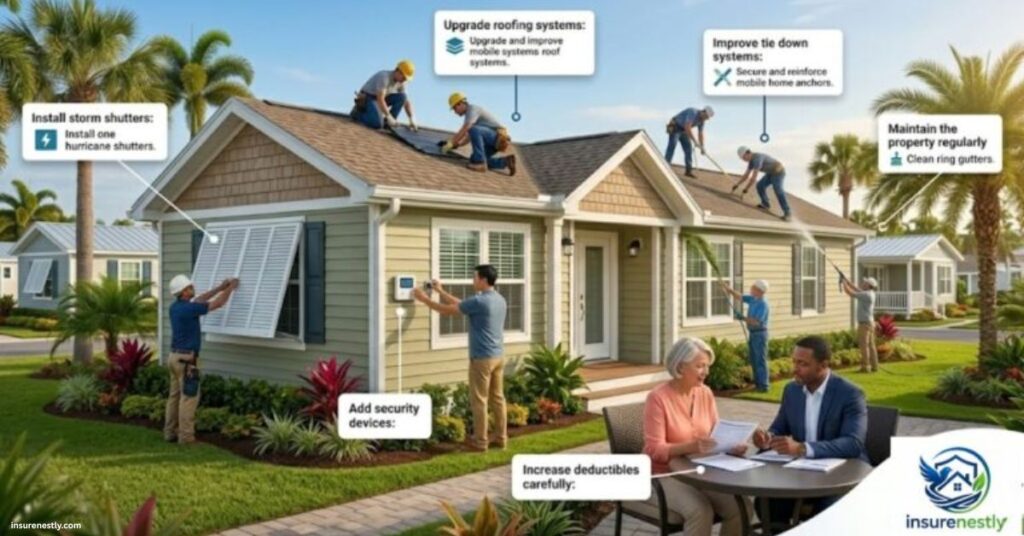
- Install storm shutters: These protect windows from high winds and flying debris.
- Upgrade roofing systems: A newer, wind rated roof greatly improves your home’s resistance.
- Improve tie down systems: Stronger anchors help secure the home during hurricanes.
- Add security devices: Alarms and cameras reduce theft risk.
- Increase deductibles carefully: Choosing a higher deductible can lower your monthly payments.
- Maintain the property regularly: Keeping the home and surroundings in good shape shows lower risk.
Home improvements that may improve insurability
| Improvement | Potential Benefit |
|---|---|
| New roof | Better weather resistance |
| Hurricane straps | Reduced wind damage risk |
| Security system | Lower theft exposure |
| Updated electrical system | Improved safety profile |
How Does the Mobile Home Insurance Claims Process Work?
Filing a claim on your mobile home insurance in Florida follows a clear process. After a storm or damage, acting quickly and providing good documentation helps the claim move faster. Knowing the steps ahead of time makes things less stressful when you need to use your policy.
Step by step claims process
| Step | What Happens |
|---|---|
| Document all damage first | Take photos and videos of everything before any repairs begin |
| File your claim promptly | Florida law gives you 1 year from hurricane landfall to file a claim |
| Insurer must respond within 14 days | Florida law requires insurers to acknowledge your claim within 14 days of receiving it |
| 90 day decision deadline | Insurer must pay, deny, or make a partial payment within 90 days of receiving all required information |
| Dispute your claim if needed | You can request free mediation through the Florida Department of Financial Services (DFS) |
| File a complaint if necessary | Go to myfloridacfo.com to file a consumer complaint if the insurer mishandles your claim |
Reasons claims may face delays
Reasons claims may face delays or denials in Florida
- Hurricane deductible confusion: Florida hurricane deductibles are percentage based, not flat dollar amounts. Many homeowners are surprised by their actual out of pocket cost when a storm hits. On a $400,000 home with a 2% hurricane deductible, you pay the first $8,000 yourself before insurance covers anything.
- High post storm claim volume: After Hurricane Helene in 2024, official state data showed that a substantial share of claims were closed without payment — though many of these involved damage below the deductible, flood losses not covered by standard policies, or claims withdrawn by homeowners, rather than formal denials. Adjusters are overwhelmed after major storms and delays are common.
- Missing documentation: Not having clear photos, videos, or receipts before repairs begin is the most common reason claims are delayed or reduced.
- Anti concurrent causation clauses: Many Florida policies allow insurers to deny coverage when an excluded cause like flooding contributed to damage alongside a covered cause like wind. This issue is especially common for mobile homes located in flood zones.
- Citizens Insurance extra requirement: If your insurer is Citizens Property Insurance, Florida law requires you to complete a neutral evaluation process through the Florida Department of Financial Services before you can file a lawsuit against them.
Common Mistakes Mobile Homeowners Should Avoid
Many mobile homeowners in Florida make mistakes that leave them with weak protection or higher costs. Avoiding these common errors can save you money and give you better coverage when you need it most.
Insurance mistakes that can create financial risk
- Choosing coverage based only on price: The cheapest policy often misses important protections needed in Florida.
- Ignoring flood risks: Standard policies do not cover floods, yet many skip buying separate flood insurance.
- Underinsuring the home: Picking low coverage limits means you may not have enough money to repair or replace your home after damage.
- Failing to update coverage after renovations: Not telling your insurer about improvements can cause claim problems later.
- Not reviewing deductibles regularly: Wrong deductible choices can lead to higher out of pocket costs.
Lowest cost policy vs stronger protection
| Choosing Only on Price | Choosing Right Coverage |
|---|---|
| Wind coverage often dropped to save money | Wind coverage kept required by Florida law and critical during hurricane season |
| No flood insurance purchased | Separate NFIP flood policy added especially important in coastal flood zones |
| Low dwelling limit chosen | Dwelling limit set to match actual replacement cost average FL hurricane claim exceeds $30,000 |
| High hurricane deductible ignored | Hurricane deductible reviewed carefully an a $300,000 home a 5% deductible means $15,000 out of pocket |
Conclusion
Florida mobile homeowners face unique weather related risks like hurricanes, strong winds, and flooding that can cause major damage. It is important to clearly understand your coverage limits, exclusions, deductibles, and optional protections such as flood and windstorm coverage. Review your policy regularly and compare different options based on your specific property risks. Taking time to choose the right coverage gives you better peace of mind and stronger financial protection.
Disclaimer
This article is for informational purposes only and is not insurance, legal, or financial advice. Insurance rules differ by company and state. Always consult a licensed insurance agent for advice specific to your mobile home.
FAQs
What is the best mobile home insurance in Florida?
Mobile home insurance options in Florida may include specialty carriers such as American Modern and Foremost. The right insurer depends on your home’s age, location, condition, and coverage needs. Compare available quotes and policy terms before choosing a policy.
How much is mobile home insurance in Florida per month?
Florida mobile home insurance costs vary based on the home’s age, size, location, condition, and selected coverage. Hurricane exposure and coastal wind risks can affect premiums, while windstorm and flood coverage may require separate policies or additional protection.
Do I need insurance on a mobile home in Florida?
Florida law generally does not require mobile home insurance, but lenders usually require coverage as a loan condition. Even without a mortgage, insurance can help protect against hurricane damage and other financial losses. Some mobile home parks may also require liability coverage, so check your loan and lease agreements for specific requirements.

Shumail is an independent insurance researcher and content writer who researches publicly available insurance information and explains coverage, costs, and insurance concepts in simple language. InsureNestly provides educational and informational content only and does not sell insurance or provide insurance advice.