
Dwelling coverage listed as Coverage A on your homeowners declarations page is the core structural protection in a standard home insurance policy. In 2026 the National Association of Home Builders reports a national average rebuild cost of $162 per square foot based on surveys of builders across the country. That figure serves as a benchmark for homes in the 1 600 to 2 800 square foot range though actual costs shift based on labor shortages local contractor rates and regional building codes a rebuild in the suburbs can run 10 to 20 percent cheaper than a comparable project in a major urban core. This guide breaks down what dwelling coverage pays for and how insurers calculate the number.
Who Wrote This Article?
Shumail is the founder of Insurenestly and an independent insurance researcher. He has spent over 5 years studying home and auto insurance topics in the U.S. He is not a licensed insurance agent and does not sell any insurance products. Instead he reads real data from trusted sources like insurance companies government reports and industry studies and turns it into simple easy to understand articles. Every fact and number in his articles is checked before publishing so readers get accurate and honest information.
What Is Home Insurance Dwelling Coverage
Dwelling coverage pays to repair or rebuild your home’s physical structure including the roof, walls, floors built in appliances and attached structures up to the policy limit you set. Most mortgage lenders require dwelling coverage equal to at least 80 percent of your home’s replacement cost value and most insurers recommend 100 percent to avoid out of pocket gaps at claim time. Dwelling coverage does not protect your land your belongings detached structures or your personal liability those fall under separate parts of the policy.
Understanding Dwelling Coverage
Most policies today pay out at replacement cost for structural damage rather than a depreciated amount. Many policies also include an inflation guard clause that automatically adjusts your coverage limit at renewal to reflect current local construction costs if your policy hasn’t changed its limit. If your dwelling coverage has not been updated since you purchased your home, it may no longer match today’s rebuilding costs. Ask your insurance company whether an inflation guard endorsement is available to help keep your coverage current.
- Protects the home’s structure
- Covers rebuilding after covered damage
- Part of standard homeowners insurance
How It Protects Your Home’s Structure
Dwelling coverage does not just protect the outer walls of your home. It also covers the parts built into the structure like floors and cabinets along with attached spaces such as a garage. If a covered event damages any of these parts dwelling coverage is what pays for the repair or rebuild.
| Covered Structure | Usually Covered |
|---|---|
| Roof | ✔ |
| Walls | ✔ |
| Floors | ✔ |
| Foundation | ✔ |
| Garage (Attached) | ✔ |
| Built in Cabinets | ✔ |
Why Coverage Amount Matters More Than Home Price
Confusing what a house would sell for with what it costs to rebuild is one of the most expensive mistakes a homeowner can make. Market value includes the land your home sits on but land survives a fire. Market value can also run below rebuild cost in many areas because construction labor and material prices have climbed faster than home prices. Rebuilding runs roughly $150 to $400 or more per square foot depending on your region and finish quality a figure market value simply doesn’t reflect.
| Home Price | Dwelling Coverage |
|---|---|
| Market value | Replacement cost |
| Includes land | Excludes land |
| Real estate market | Construction cost |
How Is Dwelling Coverage Amount Calculated?
Dwelling coverage is not a random number picked by your insurer. Nationally the average homeowners insurance premium is $2 490 per year for $400 000 of dwelling coverage but that figure swings dramatically by state from around $1 170 per year in Vermont to over $7 200 per year in Oklahoma. Understanding how insurers arrive at your specific dwelling limit and premium helps explain why your coverage amount may look nothing like your home’s selling price or mortgage balance.
Replacement Cost vs Market Value
Replacement cost and market value are two different things and mixing them up is a common mistake. Market value changes based on what buyers are willing to pay including the price of the land. Replacement cost only looks at what it would cost to rebuild the structure itself using current material and labor prices.
| Factor | Replacement Cost | Market Value |
|---|---|---|
| Includes land | No | Yes |
| Based on | Construction cost | Buyer demand |
| Changes with | Material and labor prices | Real estate market |
Construction and Labor Costs
Rebuilding a home depends heavily on local construction costs and these shift from year to year. National 2026 rebuild cost bands run roughly $165 per square foot for basic tract construction $230 per square foot for standard construction $320 per square foot for custom builds and $450 per square foot for luxury finishes. Regional multipliers matter too: West Coast and New England markets run 20 to 25 percent above the national average while the Midwest and Southeast run about 5 percent below it. After a regional disaster like a hurricane or wildfire local rebuild costs can spike 20 to 40 percent above normal as contractors get overwhelmed with demand.
- Labor cost
- Material prices
- Local construction rates
- Regional cost multipliers
- Post disaster demand spikes
Since these costs shift constantly your dwelling coverage may need to go up even if your home itself has not changed.
Why Your Home’s Selling Price Is Different
Your home’s selling price includes the value of the land it sits on along with local demand from buyers. Dwelling coverage ignores land value completely since land does not need to be rebuilt after a fire or storm.
Example: A homeowner purchases a house for $400,000 and believes that amount is enough for dwelling coverage. After a major fire, the cost to rebuild the home turns out to be much higher than expected.A kitchen fire later spreads through the house and the contractor’s rebuild estimate comes back at $520 000. The policy only pays out up to the dwelling limit leaving the homeowner $120 000 short even though the home was insured for what they paid for it.
What Does Dwelling Coverage Include in the Cost of Rebuilding a Home?
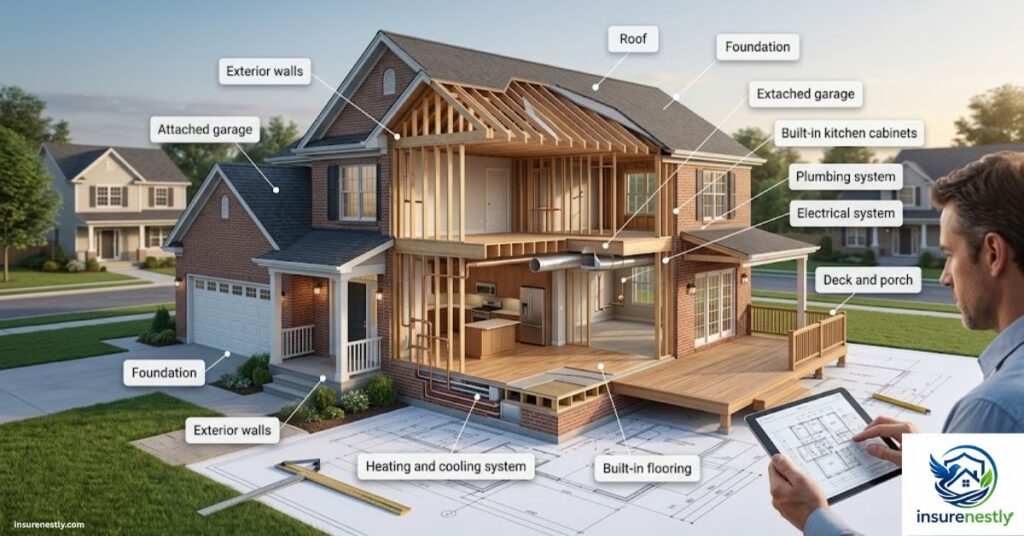
Rebuilding a home costs more than just putting up walls and a roof. It includes every part that makes the house function as a complete structure. This section breaks down exactly what falls under dwelling coverage when it comes to rebuilding costs from the main structure to attached spaces and built in features.
Structural Components Covered
Dwelling coverage pays to rebuild the core parts of your home that give it shape and support. These are the parts that cannot function as a home without being repaired first.
- Roof and exterior walls
- Foundation
- Interior walls and flooring
- Windows and doors
- Staircases
Attached Structures Included
Dwelling coverage does not stop at the main walls of your home. It also covers structures that are physically attached to the house since these are considered part of the home itself not separate buildings.
| Structure | Covered? |
|---|---|
| Attached Garage | ✔ |
| Deck | ✔ |
| Porch | ✔ |
Built In Fixtures and Permanent Features
Along with the structure itself dwelling coverage also includes fixtures that are permanently installed in your home. These are treated as part of the building not as personal belongings that could be packed up and moved.
- Built in cabinets
- Plumbing fixtures
- Electrical wiring and systems
- HVAC systems
- Built in closets and shelving
What Is Not Included in Dwelling Coverage and What Could Increase Your Costs?
Dwelling coverage has clear limits. An inch of floodwater alone can cause up to $25 000 in damage to a home yet standard homeowners policies exclude flood and earthquake losses entirely. Knowing these gaps before a loss happens is what actually protects your finances.
Flood and Earthquake Damage
Standard dwelling coverage does not include damage from floods or earthquakes. Flood coverage must be bought separately typically through the National Flood Insurance Program (NFIP) which caps building coverage at $250 000 and averages about $786 per year in premiums nationally though rates vary widely by flood zone and state. If your replacement cost exceeds $250 000 or you want higher limits private flood insurance is also available. Skipping this extra coverage entirely can leave you paying out of pocket for major structural damage.
Wear and Tear
Dwelling coverage is meant for sudden and accidental damage not slow damage caused by age or lack of upkeep. Insurers expect homeowners to maintain their property. This means things like an aging roof rusted pipes or mold from ignored leaks are usually not covered since these problems build up over time rather than happening all at once.
Personal Belongings and Detached Property
Dwelling coverage only protects the structure of your home not the things inside it or separate buildings on your property. Personal items and detached structures fall under different parts of your policy.
| Item | Covered Under |
|---|---|
| TV | Personal Property |
| Sofa | Personal Property |
| Shed | Other Structures |
How Much Does Home Insurance Dwelling Coverage Cost?
The cost of dwelling coverage is not a fixed number. The average U.S. homeowner pays about $2 490 per year or roughly $208 per month for a policy with $400 000 in dwelling coverage but rates for the same coverage amount can range from about $1 170 a year in low risk states like Vermont to over $7 200 a year in high risk states like Oklahoma. Here’s what actually moves your premium up or down.
Average Premium Factors
Several factors combine to set your dwelling coverage premium and stacking the right discounts can meaningfully cut your cost. Most insurers cap total combined discounts between 30 and 40 percent of your base premium so it pays to ask about every one you qualify for.
- Home rebuild cost
- Local risk of storms fire or crime
- Claims history
- Coverage limit chosen
- Deductible amount
Coverage Limits and Deductibles
Your deductible is the amount you pay yourself before your insurance company begins paying for a covered claim. Raising your deductible from $500 to $1 000 typically saves over $100 a year on your premium since you’re absorbing more of the risk yourself. Some states also apply percentage based deductibles for wind or hail damage instead of a flat dollar amount usually 1 to 5 percent of your total dwelling coverage limit.
| Deductible | Approx. Impact on Premium |
|---|---|
| $500 | Baseline (highest premium) |
| $1 000 | Save $100+ per year |
| $2 500 | Save more but higher out of pocket risk at claim time |
Location Home Age and Building Materials
Where your home is located and what it is built from both play a direct role in your dwelling coverage cost. State level averages alone can range from about $376 a year in Hawaii to over $3 500 a year in Oklahoma driven mainly by tornado hail and hurricane exposure rather than home value.
- Homes in high risk weather zones often cost more to insure
- Older homes may cost more due to outdated systems
- Fire resistant materials like concrete or tile roofing can lower cost
- Local construction and labor prices affect rebuild estimates
How to Estimate the Right Dwelling Coverage Value for Your Home
Getting your dwelling coverage amount right matters more than most homeowners realize. Too little coverage can leave you short during a rebuild while too much means paying for coverage you do not need. This section walks through practical ways to estimate the right number for your home and keep it updated over time.
Using Replacement Cost Estimates
The best starting point is a replacement cost estimate: home square footage multiplied by local rebuild cost per square foot which national data puts at roughly $165/sqft for basic construction up to $450/sqft for luxury builds in 2026. Insurers typically calculate this using proprietary databases like Marshall & Swift or CoreLogic but these can lag 6 to 18 months behind post disaster material cost spikes so getting an independent contractor estimate to compare is worth the effort.
Reviewing Local Construction Prices
Construction costs are not the same everywhere and they change over time. Checking current local prices for labor and materials helps you see if your coverage still matches what it would cost to rebuild in your area today. If prices have gone up since you bought your policy your dwelling coverage may need an increase to keep up with those changes.
Updating Coverage After Renovations
Any major change to your home can affect how much it would cost to rebuild so your coverage should be updated after big renovations. Forgetting to update your policy after a remodel is one of the most common reasons homeowners end up underinsured.
- Kitchen remodeled
- Roof replaced
- New room added
- Garage expanded
How Can You Lower Dwelling Coverage Costs Without Losing Protection?

Lowering your premium does not have to mean cutting back on protection. On a $2 400 base premium stacking a monitored alarm a claims free record bundled policies and annual payment can realistically bring the cost down to $1 500 $2 000 with the right carrier a savings of 15 to 40 percent.
Choosing the Right Deductible
Choosing a higher deductible is one of the simplest ways to reduce your home insurance premium. Since you agree to pay more out of pocket before insurance kicks in the insurer takes on less risk and charges you less for it. Choose a deductible that fits your budget so you can comfortably pay it if you ever need to file a covered claim.
Home Safety Improvements
Adding safety features to your home can reduce risk in the eyes of your insurer which often leads to a lower premium.
- Smoke alarms
- Security systems
- Fire extinguishers
These safety improvements reduce the risk of serious damage, so many insurance companies offer discounts to homeowners who install them.
Bundling Insurance Policies
Combining your home insurance with other policies like auto insurance under the same company can often bring a lower rate on both. Bundling is one of the most common discounts offered across the insurance industry and it is worth checking with your insurer to see how much you could save by putting more than one policy under the same provider.
Dwelling Coverage vs Other Home Insurance Coverages
| Coverage | Protects |
|---|---|
| Dwelling | House |
| Personal Property | Belongings |
| Other Structures | Detached Garage |
| Loss of Use | Living Expenses |
Common Mistakes That Can Lead to Higher Repair Costs or Underinsurance
Many homeowners end up underinsured without even realizing it usually because of a few common mistakes made when setting up or renewing a policy. These mistakes can leave you paying out of pocket for repair costs that should have been covered. This section covers the most common ones and how to avoid them.
Choosing Coverage Based on Market Value
One of the biggest mistakes is setting dwelling coverage based on your home’s selling price instead of its actual rebuild cost. Market value includes land which does not need to be rebuilt after damage. If you base your dwelling coverage on your home’s market value instead of its replacement cost, your insurance may not provide enough money to fully rebuild your home after a covered loss.
Ignoring Rising Construction Costs
Construction costs do not stay the same year after year they tend to rise with material and labor prices. If you set your dwelling coverage once and never adjust it your coverage can fall behind actual rebuild costs over time. This gap often goes unnoticed until a claim is filed at which point it is too late to fix.
Not Reviewing Coverage Every Year
Home insurance is not something you can set once and forget. Life changes home values shift and construction prices move so your policy needs regular check ins to stay accurate.
- Annual review
- Home upgrades
- Inflation
- Local building costs
Conclusion
Home insurance dwelling coverage is one of the most important parts of your homeowners policy since it directly protects the structure of your home. It covers the walls roof foundation and attached spaces but it does not cover floods earthquakes or normal wear from aging. Getting the coverage amount right based on replacement cost rather than market value is what actually protects you if you ever need to rebuild.
Disclaimer
This article is written for general information only and is based on independent research from publicly available sources including insurance company websites and third party review sites. I am not a licensed insurance agent or service provider and I do not sell or provide insurance policies of any kind.
I take information from other trusted sources and write it in a simple easy to understand way for readers. This article should not be treated as professional insurance advice. Coverage details costs and rules can change and may vary based on your location and personal situation so please speak directly with a licensed insurance agent before making any decisions about your dwelling coverage or homeowners policy.
References and sources:
FAQs
What is an inflation guard endorsement and do I need one?
An inflation guard automatically adjusts your dwelling coverage limit at renewal to match rising local construction costs. If your coverage limit hasn’t changed since you bought your policy you’re likely underinsured so it’s worth asking your insurer if this endorsement is available.
How much can raising my deductible actually save me?
Raising your deductible from $500 to $1 000 typically saves over $100 a year on your premium. Some states also use percentage based deductibles for wind or hail damage instead of a flat dollar amount usually 1 to 5 percent of your dwelling coverage limit.
Do I need to update my dwelling coverage after a renovation?
Yes. Any major renovation like a kitchen remodel new room or roof replacement can change your home’s rebuild cost. Forgetting to update your policy afterward is one of the most common reasons homeowners end up underinsured.
Does dwelling coverage protect a detached garage or shed?
No. Dwelling coverage only applies to your main house and structures physically attached to it like an attached garage. Detached structures fall under a separate part of your policy called other structures coverage.
How much can bundling home and auto insurance save me?
Bundling can meaningfully lower your premium and insurers often cap total combined discounts between 30 and 40 percent of your base premium. It’s worth asking your provider about every discount you qualify for not just bundling alone.

Shumail is an independent insurance researcher and content writer who researches publicly available insurance information and explains coverage, costs, and insurance concepts in simple language. InsureNestly provides educational and informational content only and does not sell insurance or provide insurance advice.