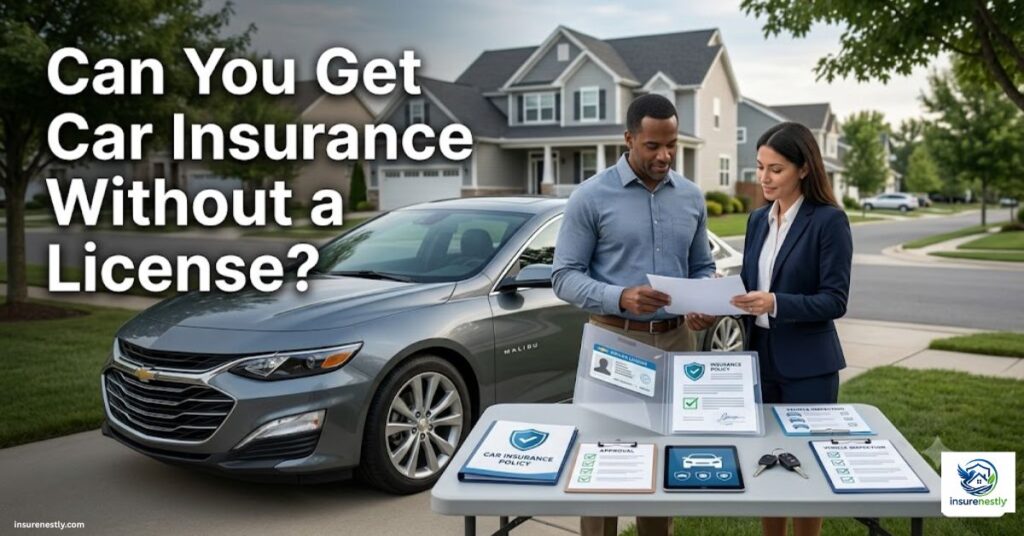
Can You Get Car Insurance Without a License? Yes, it is possible to get car insurance even if you don’t have a driver’s license but only in certain situations, and approval isn’t guaranteed. Whether you qualify depends on why you don’t have a license, which insurer you apply with, and what your state allows.
Common cases where this works include owning a car you don’t personally drive, holding a learner’s permit, dealing with a suspended or revoked license, or having a license from another country. In each case, insurers usually need a licensed driver’s information on the policy, even if that person isn’t you.
About the Author Can You Get Car Insurance Without a License?
Insurenestly is an independent research platform focused on US car and home insurance, and this article was written by its research team, who study state insurance rules, pricing data, and coverage options to give readers clear, source backed information not sold as insurance advice, but as a starting point for asking your insurer the right questions.
Is It Legal to Get Car Insurance Without a Driver’s License?
Yes, you can get car insurance without a driver’s license. Most insurers don’t require a license to sell you a policy, since owning and insuring a car is legally separate from driving one. But holding a policy doesn’t give you legal permission to drive that still requires a valid license.
People typically need this kind of coverage for a few common reasons:
- A family member, caregiver, or chauffeur drives the car for them
- The license is suspended and they’re waiting on reinstatement
- The car is parked or in storage and not being driven at all
- They hold a learner’s permit instead of a full license
- They’re an international driver without a US license
When getting approved is difficult
Approval gets harder the less information you can give an insurer. A completely unlicensed applicant, with no licensed driver to name on the policy, is the toughest case many large national carriers will simply decline. Smaller insurers, brokers, and companies used to high risk drivers tend to have more flexibility here.
- Some major insurers (GEICO, Progressive, State Farm) are more open to writing policies for unlicensed drivers, but usually only over the phone, not through an online quote
- A suspended license often calls for an SR 22 filing to prove minimum coverage
- If no licensed driver can be named on the policy, expect fewer company options and higher rates
Why insurers ask for driver information
A license number is how an insurer pulls your driving record accidents, violations, claims history. That record is the main input they use to price risk and set your premium. Without it, they’re pricing a policy with much less information about you.
Who Can Buy Car Insurance Without a License?
Insurers see unlicensed applicants differently depending on why they don’t have a license. Here are the situations that come up most often.
You own a vehicle but don’t drive it
You can own and insure a car even if you never plan to drive it for example, if a caregiver or family member uses it for you. This is often called a “parked car” or “storage” policy. It usually costs less than a full policy since the insurer isn’t covering active driving risk, but you’ll still need to name whoever does drive it as the primary or rated driver.
You are in the process of getting your driver’s license
Drivers with only a learner’s permit can usually still be insured, since a permit shows the state has already approved some driving privileges. Insurers typically ask for the permit number instead of a full license and price the policy based on the household’s other licensed drivers.
Your license is suspended or revoked
A suspended or revoked license is the most common reason people search for this coverage. Most states require an SR 22 (or FR 44 in Florida and Virginia) to prove you carry minimum liability coverage before your license can be reinstated. If you don’t own a car, a non owner SR 22 policy works instead of a standard one.
- Non owner SR 22 insurance averages $574 a year nationwide, ranging from about $262 in South Dakota to $1,487 in New Jersey
- On top of the premium, insurers usually charge a one time filing fee of $15 to $50 to submit the SR 22 to your state
- Most insurers file the SR 22 electronically the same day, so reinstatement isn’t delayed
You have a foreign driver’s license
If you hold a valid license from another country, most US insurers will still write you a policy, though the process usually needs a phone call rather than an online quote. Some companies ask for an International Driving Permit alongside your foreign license, and your driving record from your home country may not be checked the same way a US record is so rates can run higher until you build US driving history.
How Do You Apply for Car Insurance Without a License?
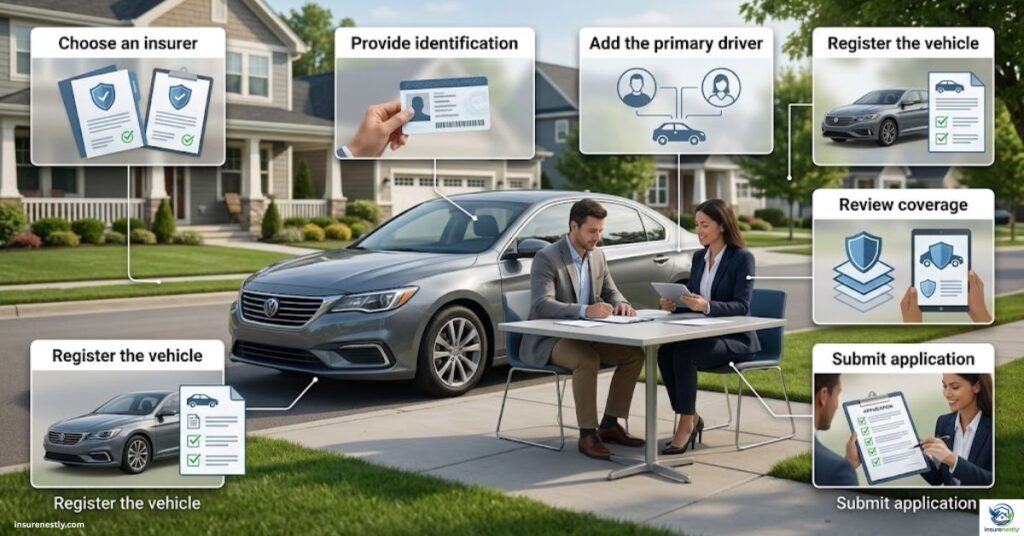
Choose the right policyholder
If you don’t have a license, you can still be the policyholder the person who owns the policy and pays for it even if you’re not the one driving.
Add the person who will drive the car
List the person who actually drives the vehicle most as the primary or rated driver. Their license and driving history will be used to calculate your premium.
- If that person has a clean record, your rate stays closer to normal
- If they have violations or accidents, expect a higher premium
- You (the unlicensed owner) are usually added as an “excluded driver,” meaning the policy won’t pay out if you end up driving and cause a claim
Share accurate information on your application
Don’t leave the license field blank or guess at details to speed things up. Tell the insurer directly that you don’t hold a license and explain why parked car, suspended license, permit, or foreign license. Insurers who work with unlicensed applicants regularly are used to these conversations, and giving accurate details upfront avoids a denied claim later if the truth comes out after an accident.
What Information Will You Need When Applying?
Vehicle details
Insurance companies need a clear understanding of what they are being asked to insure. Have these ready before you call or apply:
- Vehicle Identification Number (VIN), make, model, and year
- How the car is used daily driving, occasional use, or parked and stored
- Estimated annual mileage
- Whether the car is owned outright or financed, since lenders often require full coverage
Owner identification
Since you can’t provide a driver’s license, insurers will ask for other proof of identity: your Social Security number, a state ID card, or a passport. This confirms who you are and lets the insurer run a background and credit check where allowed, which still factors into your rate even without a driving record to review.
Driver information
If someone else will drive the car, the insurer needs their full details, not just their name:
- Full legal name and date of birth
- Driver’s license number and state of issue
- Years licensed and driving history
- Relationship to the policyholder (spouse, parent, caregiver, etc.)
Leaving this incomplete is one of the main reasons applications get delayed, since the insurer can’t price the policy without knowing who’s actually behind the wheel.
What Problems Can You Face Without a Driver’s License?
Higher insurance costs
Without a license, insurers have less data to work with, and less data usually means more caution, not less. A standard licensed driver paid an average of $1,163 for a six month policy in 2026 unlicensed applicants often pay more than that for comparable coverage, since the insurer is pricing in extra uncertainty.
Limited insurer options
Not every company writes policies for unlicensed drivers. Many large insurers decline these applications through their standard online process entirely. In most cases, your available options are limited to:
- A handful of national insurers willing to write these policies over the phone
- Smaller regional insurers or brokers who specialize in non standard cases
- High risk specialists, especially if an SR 22 is also involved
Risk of application rejection
Even insurers open to unlicensed applicants can still decline a specific application. This is more likely if you can’t name a licensed primary driver, if the vehicle will be actively driven without one, or if the information you provide is incomplete or inconsistent. Being upfront and thorough on the application rather than leaving gaps is the biggest factor in avoiding rejection.
Can Someone Else Drive a Car That You Insure?
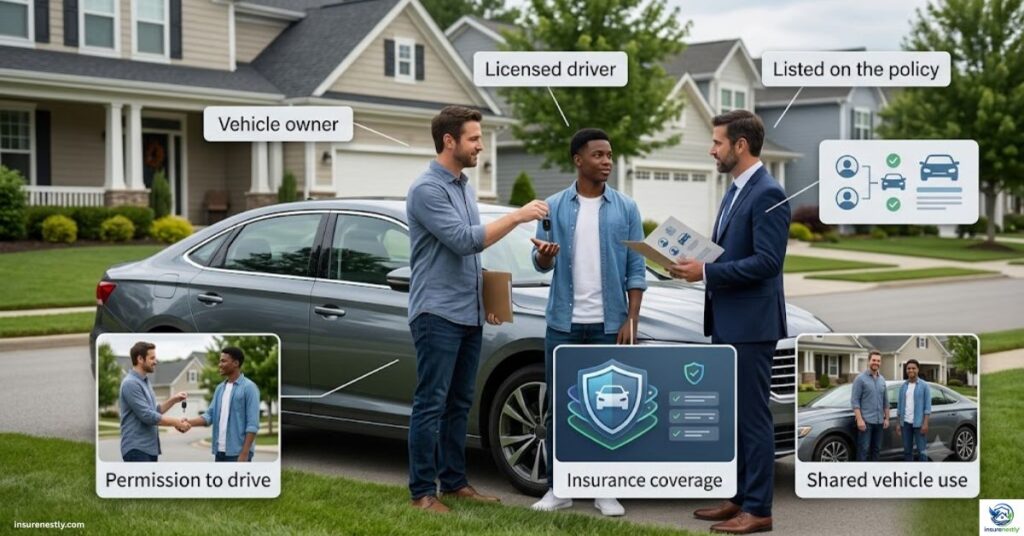
Yes. Insurance follows the vehicle in most situations, so a licensed household member or a permitted borrower can legally drive a car you own and insure, as long as they’re properly listed on the policy first.
Who should be the primary driver
The primary driver should be whoever actually drives the car the most, not just whoever’s convenient to list accuracy here matters more than trying to game the premium by naming yourself instead.
When another family member should be listed
Any licensed person in your household who might realistically drive the car should be listed on the policy, even occasionally. Leaving them off isn’t a way to save money most insurers require all household drivers of age to be listed or formally excluded.
- A spouse or adult child who drives the car regularly should be the primary or a listed driver
- A family member who might drive only occasionally should still be listed, not left off entirely
- Someone who will genuinely never drive the car can stay as an excluded driver just make sure that stays true, since the next section covers what happens if it doesn’t
Mistakes that can lead to claim problems
The biggest mistake is letting an excluded driver get behind the wheel. If that happens and there’s an accident, the insurer can deny the entire claim, leaving both the driver and the owner personally responsible for damages.
- Listing an inaccurate primary driver to get a lower quote
- Forgetting to update the policy when a new household member starts driving
- Assuming an excluded driver is still covered “just this once”
How Much Does Car Insurance Cost Without a License?
What affects your premium
Without a license, insurers lean more heavily on other factors to set your price:
- The primary driver’s age, driving record, and years licensed
- Vehicle type, age, and how it’s used (parked, occasional, or daily)
- Your state, since SR 22 and non owner rules vary widely
- Whether you’re excluded from coverage or simply unlicensed with no primary driver named
When you may pay more
Expect higher costs specifically when no licensed primary driver can be named, when an SR 22 is required, or when you’re shopping with insurers who treat unlicensed applicants as high risk by default as covered earlier, non owner SR 22 policies alone can add several hundred dollars a year depending on your state.
Ways to reduce your insurance cost
- List a primary driver with a clean record instead of relying on your own unlicensed status
- Choose parked car or storage only coverage if the vehicle won’t be driven at all
- Compare quotes from at least three insurers, since pricing for unlicensed applicants varies a lot by company
- Ask about discounts for autopay, paperless billing, paying in full, or bundling with another policy
- Improve your credit score where the state allows it, since it can still affect your rate
Conclusion
Getting car insurance without a license is possible, but it isn’t automatic. Your options depend on why you don’t have a license whether you’re storing a car, waiting on a permit, dealing with a suspended license, or holding a foreign one and each situation points to a different type of policy.
Disclaimer
This article is written for general information only, based on independent research it is not professional insurance advice. Insurenestly is a research platform, not a licensed insurance agent, broker, or provider, and we don’t sell policies or earn any commission from the options mentioned in this guide.
References and Source
FAQs
Do I need an SR 22 if I just don’t have a license, or only if it’s suspended?
An SR 22 is only required if your state has ordered you to file one, typically after a license suspension or revocation. Simply never having had a license doesn’t trigger this requirement on its own.
Can I get a quote online if I don’t have a license?
Usually not. Most insurers that write policies for unlicensed applicants require a phone call, since their standard online quote tools are built around entering a driver’s license number.
Will my rate go up if the primary driver I list isn’t a relative?
It can, depending on the insurer. Some companies price differently for a non relative primary driver, since the relationship can affect how the insurer assesses shared use and risk of the vehicle.
What happens if my excluded driver status is violated and I drive anyway?
If you’re listed as excluded and you drive the insured car, any resulting accident claim can be denied outright, leaving you personally responsible for damages and injuries.

Shumail is an independent insurance researcher and content writer who researches publicly available insurance information and explains coverage, costs, and insurance concepts in simple language. InsureNestly provides educational and informational content only and does not sell insurance or provide insurance advice.