Storms can cause expensive losses to a home and homeowners insurance can help cover certain property damage caused by events such as wind damage, hail damage, fire, theft and water damage, depending on the policy and type of loss. Research from the Insurance Information Institute has highlighted storms and other events among the common causes of damage, while data from 2014 and 2018 shows how frequently homeowners have filed claims for different types of losses.
A bad storm can result in storm related damage, including wind and hail damage, leaving homeowners with significant repair costs and replacement costs. When a covered loss occurs, homeowners may need to understand their insurance coverage, wind damage coverage and the process for submitting insurance claims.
However not every form of storm damage or damage from storms is covered, so reviewing the homeowners policy and policy terms can help clarify what the insurer may pay for and what homeowners may need to pay themselves for repair costs.
What Wind Damage Does Homeowners Insurance Cover?
A standard homeowners insurance policy generally provides wind damage coverage when wind causes sudden property damage during covered weather events. In my experience reviewing home insurance coverage, the key is to connect the damage caused by wind to a covered storm, rather than assuming every type of storm related loss is included.
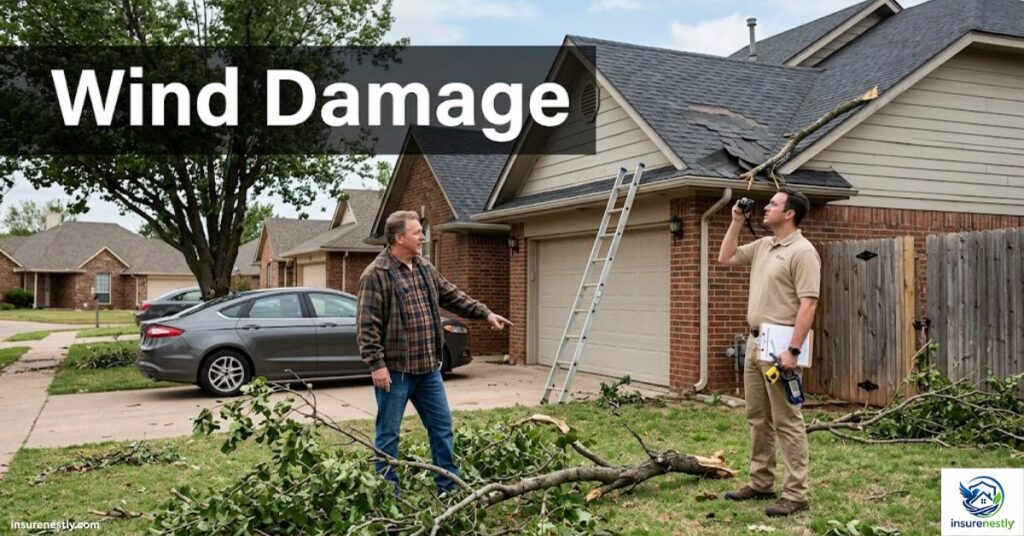
Common types of storms that may cause covered damage include a windstorm, tornado, thunderstorm, Nor’easter, hurricane, microburst and sometimes a hailstorm, depending on the policy terms. Damaging winds can lead to roof damage, window damage, destruction to roofs or destruction to windows and these losses may fall under insurance coverage when the homeowners policy lists the event as covered.
However the exact coverage depends on the policy, location, exclusions and deductible, so severe weather does not automatically mean every loss is covered insurers may review the cause of the storm damage, the condition of the home and whether the storm related damage resulted directly from wind damage or another excluded cause.
When Does Home Insurance Cover Wind Damage?
Windstorms and hurricanes → Explain that wind related damage from these events may be covered, depending on the policy and location.
- Roof damage → Mention damage to the roof caused by a covered wind event and how dwelling coverage may help with repair or replacement.
- Personal property damage → Explain that belongings inside the home may be covered under personal property coverage when damaged by a covered wind event.
- Dwelling coverage → Explain how it can help pay for covered damage to the home’s physical structure.
- Windstorm and hurricane deductibles → Explain that some states and policies use special deductibles, which can be higher than standard deductibles.
- Coverage limits → Mention that the insurer will only pay up to the applicable policy limits for a covered loss.
- Policy exclusions → Explain that not every type of wind related loss is automatically covered and that exclusions can vary by policy.
- Policy review → Encourage homeowners to check their policy before a claim so they understand deductibles, limits, covered property and exclusions.
- Storm damage claim → Briefly explain that homeowners should document the damage and review their coverage before filing a claim.
Wind Damage to Roofs: Coverage, Exclusions & Deductibles
When a wind event causes sudden wind damage to your roofs, homeowners insurance may help pay for roof repair or roof replacement when the loss falls within your homeowners policy and policy coverage. The insurance process usually starts with a damage evaluation, where the insurance carrier checks the cause and extent of the property damage, including structural damage, existing damage and prior damage.
In practice, insurers may not cover maintenance issues or unresolved maintenance issues, because a policy is generally designed for sudden damage rather than problems that developed over time. Roof age and policy type can also affect coverage, roof replacement coverage and the replacement costs available for a covered loss.
For example, a Travelers representative may explain how the insurer determines appropriate reimbursement based on the policy and damage assessment. If the wind event damage affects a shed, freestanding garage or other detached property, other structures coverage may apply if included in the policy.
Understanding these terms before filing a claim can help homeowners know whether roof damage repair, roof replacement or other repair costs may qualify for coverage rather than assuming every type of damage to the property is covered.
Wind Damage to Siding and Exterior Walls: What Insurance Pays For
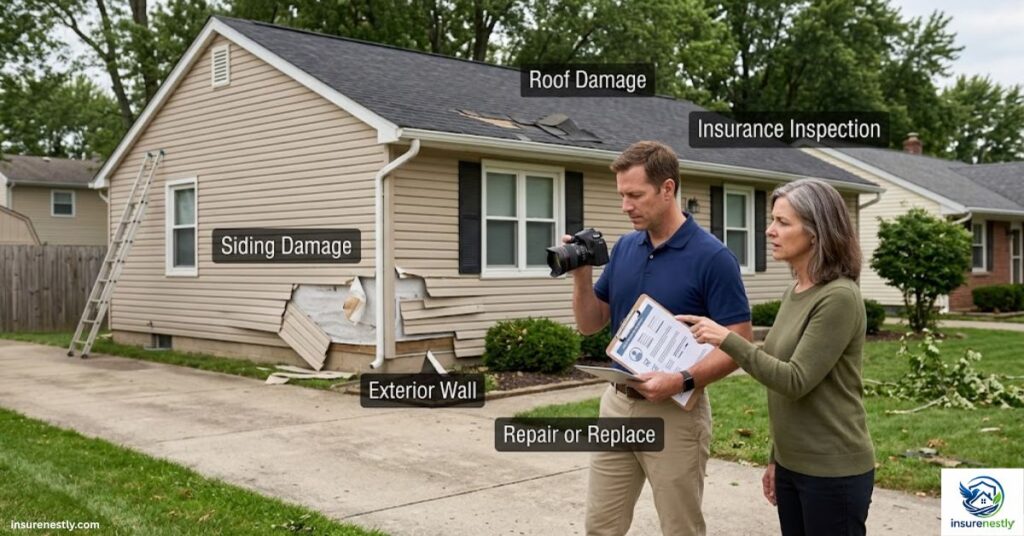
When a wind event causes sudden siding damage, homeowners insurance may provide wind damage coverage for the cost to repair or replace siding, depending on the homeowners policy and its coverage terms. For example, vinyl siding, metal siding and other kinds of siding may qualify for insurance coverage when the damage results directly from a covered wind event rather than wear or an excluded cause.
A claim may cover damaged siding and related property damage when the loss affects the home structure and falls under homeowners coverage, while structural protection helps protect the physical parts of the home. If the insurer approves siding replacement, replacement costs depend on the policy and the extent of the damage.
In some cases, matching the look of home and maintaining a reasonably uniform visual appearance can also matter when replacing wind damaged siding, particularly if the original material is no longer available. Homeowners should also check whether nearby roof damage occurred during the same event, since the roof and siding may be evaluated together as part of the wind damaged property claim and overall home protection.
Wind Damage to Fences, Gates and Other Outdoor Structures
A standard homeowners policies typically include other structures coverage, which may help pay for a fence, gate or similar outdoor structure when wind damage causes covered property damage. For example, a wind damaged fence or destroyed fence may qualify for insurance coverage under the homeowners policy, but the amount of the insurance payment can depend on the coverage limit, deductible and whether the policy uses actual cash value or replacement value.
With actual cash value, the insurer may consider depreciation, meaning the payment can reflect the fence’s depreciated value rather than the full cost to purchase a new one. Replacement value may provide a higher reimbursement when the policy allows it, but homeowners should not assume the purchase price or current fence value automatically determines the insurance payment.
A damaged fence may also have a different actual value after depreciation, so checking the policy before filing a claim can clarify how much the insurer may pay for fence damage, wind damage coverage and other covered outdoor property.
Eliminate Potential Projectiles
Protect Your Roof From Wind Damage
Regular roof inspection is one of the most practical proactive measures you can take to protect your house from wind damage and reduce the risk of roof damage during wind driven events. From a basic site inspection, walk a safe distance from your home and use binoculars to check for missing shingles, missing tiles, loose shingles or loose tiles and look for any daylight visible through areas that should be sealed.
Check that shingles and tiles are firmly attached, while also examining the gutters and downspouts for loose sections or debris that could become a hazard during high winds. If you find damage, have a licensed contractor inspect the roof and complete the necessary repair or replacement before severe weather arrives.
This type of roof protection can help safeguard your investment, secure your home and prevent significant damage, while homeowners insurance may provide protection when covered wind damage occurs.
Check Your Siding for Wind Damage
A careful siding inspection can help spot wind damage before it leads to larger problems with your home and property protection. Look for loose siding, signs of deterioration or other siding damage, especially around doors, windows, water lines, wires and the dryer vent, where gaps or loose sections can allow water and debris to enter.
If you find damaged sections, reattaching siding, resealing siding or arranging siding repair can help keep the exterior secure and reduce the chance of further damage during high winds.
Remove or Secure Outdoor Items
Before an approaching windstorm, inspect outside items around your property and secure items that could become projectiles during high winds. Move or secure lawn furniture, hanging baskets, grills, bicycles and toys and remove items that cannot be safely secured.
Also check for dead tree branches, overhanging tree branches and weak tree branches and remove hazardous branches when it is safe to do so. These simple home protection steps can reduce the risk of wind damage, property damage and home damage caused when outdoor objects are blown into the house or other structures during a windstorm.
Conclusion
Wind damage can create expensive repair and replacement needs, especially when strong storms affect roofs, siding, windows and other parts of a home. Homeowners insurance may help with covered losses, but the amount you receive depends on your policy coverage, deductibles, coverage limits and applicable exclusions. Reviewing your policy before severe weather occurs can help you understand what protection you have and what costs you may need to pay yourself. Taking basic steps to protect your property from high winds can also reduce the risk of damage and make the insurance claims process easier if a covered loss occurs. As insurance terms vary by state and policy, homeowners should review their coverage carefully and speak with a licensed insurance professional when they need advice about their specific situation.
Disclaimer
The information in this article is provided for general educational and research purposes only. It explains common aspects of homeowners insurance, wind damage coverage, exclusions and deductibles, but it does not provide insurance, legal or financial advice. Insurance coverage, deductibles, limits, exclusions and claim requirements can vary by state, insurer and policy. Readers should review their own policy documents and contact a licensed insurance professional for advice about their specific coverage and situation. Information, rates, terms and insurance rules may also change over time, so always verify current details with a qualified source before making an insurance decision.
Follow Our Social Accounts:
Frequently Asked Questions
How can I tell if wind caused the damage to my property?
Look for signs such as broken branches, displaced outdoor materials, impact marks and damage patterns that match the direction or strength of the wind. Photos and professional inspection records can also help establish the cause.
What should I do immediately after a severe windstorm?
Check for immediate safety hazards, stay away from damaged electrical lines, prevent additional damage when it is safe and document the condition of your property before cleanup or repairs.
Can wind damage affect a home’s electrical system?
Yes. Strong winds can damage exterior wiring, electrical connections, utility equipment or other components. Electrical hazards should be handled by a qualified professional rather than repaired yourself.
How long should I keep records related to wind damage?
Keep photos, receipts, contractor estimates, inspection reports and claim related correspondence for as long as they may be useful for your insurance records and any future dispute.
Can neighboring property damage affect my wind damage claim?
It can depend on how the damage occurred and which property was affected. Responsibility may involve your own policy, another party’s insurance or other circumstances surrounding the wind event.

Shumail is an independent insurance researcher and content writer who researches publicly available insurance information and explains coverage, costs, and insurance concepts in simple language. InsureNestly provides educational and informational content only and does not sell insurance or provide insurance advice.