Last Updates: 17-September-2026
A classic car policy can look simple until you compare the real insurance risks of weekend cruising with regular daily driving. For collector vehicle owners, vintage vehicle insurance often comes with mileage restrictions, specific policy language and different coverage types than standard policies.
Classic car insurance may offer agreed value coverage, but commuting, a work commute or using a daily driver for stop and go driving can create hidden risks when the policy is designed for occasional use. Enthusiasts and classic car owners should understand policy restrictions, coverage limits, mileage limits and policy terms before choosing collector car insurance, especially when insurance costs and the value of vehicle protection matter.
A collector vehicle may be used for weekend driving, car shows or occasional trips, while true daily drivers face different insurance risks from everyday driving, daily commuting and repeated stop and go commutes. These differences can affect eligibility, insurance coverage, claims, the claim process and even lead to claim denial or claim denials when actual use does not match the policy.
Understanding the trade offs between limited mileage, driving, work and regular transportation helps collector car owners make an informed decision about the best protection in 2026, rather than choosing a policy based only on price or assuming that every vintage vehicle qualifies for the same coverage.
How Classic Car Insurance Works for Vintage Vehicles
For vintage vehicles, insurance often works differently from regular auto insurance policies, especially when the vehicle has a special history or higher collector value. An insurer may use its own insurer’s criteria to decide whether a classic car or collectible car qualifies and age can be one factor, with some companies considering cars that are 10 years old or more depending on their rules.
Standard policies may base coverage and a claim on the depreciated market value, while classic car insurance often uses agreed value. With an agreed value approach, you and the insurer mutually agree on the vehicle’s value upfront, so the amount payable after a total loss can reflect the vehicle’s condition and unique history rather than simply applying depreciation to its market value.
This can make insurance coverage more suitable for collectible vehicles, where ordinary market value may not fully represent what the car is worth, although the policy’s total loss payout still depends on its specific terms.
Classic Car Insurance: Key Coverage Features
- Agreed value coverage: A classic car insurance policy may use a pre determined value instead of relying only on the vehicle’s market worth or depreciated value. This value can reflect factors such as rarity, restoration quality and the condition of the vehicle, giving a collector vehicle a clearer basis for a claim.
- Usage restrictions: Insurers often place use restrictions on classic cars because they are not normally treated like daily drivers. The policy may allow occasional pleasure driving, exhibitions and car shows, while setting mileage limits that help control risk and may support better rates.
- Specialized repair coverage: Some specialty insurance policies provide protection suited to restoration needs, including original parts or authentic parts. This can matter when ordinary repairs using standard aftermarket parts may not preserve the vehicle’s original character, although limits on repair costs can still apply.
- Storage requirements: A classic car may need specific vehicle storage conditions to qualify for coverage. An insurer may require a secure garage or another enclosed space when the insurance policy includes specialized insurance coverage for a valuable collector vehicle.
Key Benefits of Classic Car Insurance
- Cost savings: Classic cars that are not used for daily use and are stored safely may qualify for lower premiums than some standard auto policies. Specialty insurers often design pricing around limited use, storage and the lower risk profile of a classic vehicle.
- Customized coverage: Unlike standard auto insurance, classic car insurance can offer customized coverage for the unique needs of owners, including restoration, spare parts, special events and restoration coverage that may better suit valuable vintage vehicles.
- Financial security: Agreed value coverage can provide greater financial security because the insured and insurer agree on the vehicle value in advance. If the car stolen or is totaled, the policy may help the owner be compensated fairly, subject to its terms and limits.
- Specialized expertise: Specialty insurers often have greater expertise with the unique risks and values linked to classic vehicles. This can make the insurance coverage more suitable for concerns such as theft, total loss and the higher value associated with a well maintained collector car.
Can You Use a Classic Car as a Daily Driver?
A classic car may look suitable for daily driving, but specialty insurers often design collector car policies around limited use rather than daily commuting. During premium calculation, the insurer may review the insurance profile, annual mileage, vehicle storage and whether the car is an excess vehicle or your primary vehicle.
A collector vehicle used as a main mode of transport can have a different usage profile from a car reserved for occasional use and the insurer may underwrite it differently because everyday transportation, commuting and everyday driving can increase accident risk, wear and tear.
Some specialty product policies may not provide the same insurance savings or reliable coverage when the vehicle becomes a daily driver, while a standard automobile insurance policy or standard auto policy may be more appropriate for regular transportation.
Before changing how you use the vehicle, review the policy terms, insurance coverage, premium, coverage gaps and claims process, because failing to report increased daily driving could affect claims and leave you with less protection than expected.
How Classic Car Insurance Mileage Limits Work
Mileage restrictions are a common part of specialty policies and the annual mileage limit can vary based on the insurer’s actuarial benchmarks and expected vehicle use. Some policies may set mileage limits such as 3,000 miles, 5,000 miles or 7,500 miles, while higher limits such as 12,000 miles or 15,000 miles may be less typical for a classic car used mainly for pleasure use, car shows or weekend trips.
A typical commuter who regularly uses the vehicle for commuting may exceed the allowed mileage, so mileage enforcement can involve odometer readings at the start of a policy and during policy renewal. For example, 4,000 annual miles shown on an odometer may not raise a concern under a 5,000 mile annual cap, but repeated increases can become a red flag and trigger an underwriting review.
Some specialty insurers may use a usage based telematics device to monitor miles driven or may reclassify the vehicle into a higher risk tier or non renew the policy if the usage no longer matches its terms. A pleasure use only policy may exclude commuting to work or commuting to school; for example, a 10 mile round trip commute made five days a week equals about 2,600 miles per year, which can use more than half of a 5,000 mile annual cap before other driving is counted.
Watch Out for disqualifying use because regular commuting could increase premiums by 20 30% or affect claims if the policy specifically restricts such use. A 20 miles round trip commute can reach 5,000 miles per year after roughly 250 workdays, leaving little room for weekend driving. Some policies may offer occasional commuting endorsements for limited commuter use, such as 2,500 miles per year, 30 days per year or once or twice a week, but the exact endorsement depends on the insurer.
If commuter use becomes your primary transportation, a classic car policy may no longer provide the right policy fit and a standard auto policy could be more suitable for daily driving and broader insurance coverage. Always check the purpose of trips, annual mileage limit and pleasure use only clause before relying on the policy for regular driving.
Classic Car Insurance Valuation: Agreed Value vs. Actual Cash Value
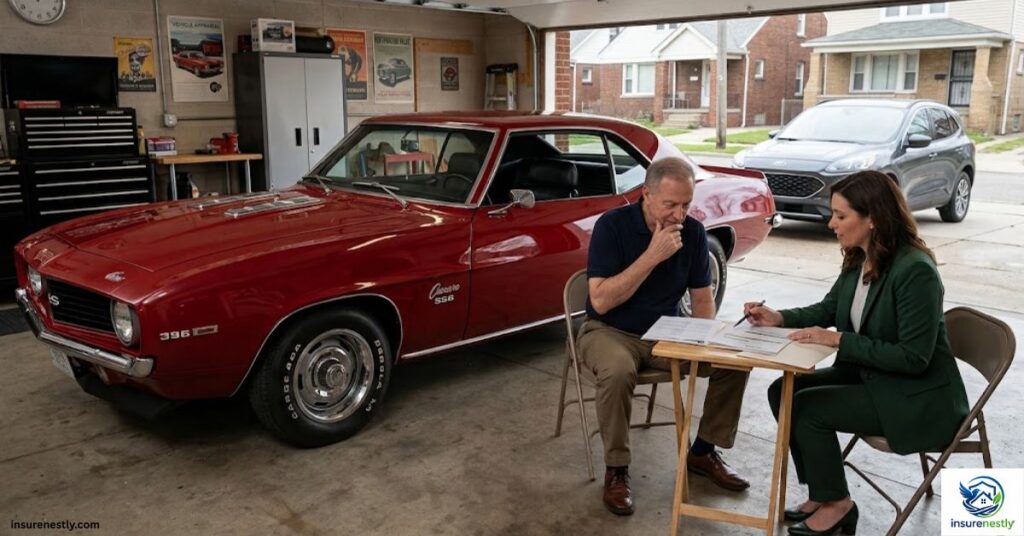
Classic car insurance often uses agreed value as a valuable feature because of the difference between this method and actual cash value when protecting your investment. With an agreed value policy, the insurer and owner set a fixed amount, often supported by a vehicle appraisal, so the policy can pay the agreed full amount after a total loss, subject to its terms.
By contrast, actual cash value generally accounts for depreciation, meaning a vintage vehicle may receive less than its replacement cost or what the owner believes it is worth. This matters for a collector car that has appreciated value because of restoration or condition, while standard auto policies can be a poor fit for a classic car with significant restoration value.
However, coverage, usage restrictions and other coverage restrictions still apply, particularly when the vehicle is used by daily drivers or as a daily driver. Hagerty’s collector car insurance guide also highlights the importance of valuation when choosing collector car insurance, so reviewing the insurance policy, expected payout and investment protection terms is important before selecting coverage.
Can You Commute in a Classic Car With Specialty Insurance?
With a classic car, daily commuting can create risks that differ from occasional use because daily driving increases road exposure, the chance of accidents and wear on older components that may require expensive repairs. Insurers typically underwrite classic car policies around low risk usage, so their risk assessment may change when the vehicle becomes a regular daily driver or primary transportation.
Before using a collector policy for a morning commute, check the policy terms, permitted vehicle use and commuting risk because a regular daily commuting pattern may violate the policy. If an insurance claim follows an accident and an insurer investigation finds unauthorized use, the company could consider denying coverage, resulting in a coverage denial, out of pocket costs and responsibility for repairs or repair costs.
Watch Out for a policy violation because an insurer may deny claim or even cancel policy when the vehicle is used outside the agreed terms. A modern car may be more suitable for regular commuting, while collector car insurance can preserve financial protection and insurance coverage when the classic vehicle remains within its permitted use.
Can Standard Auto Insurance Cover a Classic Car? Costs and Coverage
Standard auto insurance can sometimes cover a vintage vehicle, but a standard auto policy may work differently from classic car policies, especially when the owner expects unrestricted daily use or regular daily driving. A classic car driven only five miles or fifty miles on occasional trips may have a different daily mileage profile from a vehicle used for regular commuting, so the right vehicle coverage depends on how the car is used and whether you have other vehicle available for everyday transportation.
A Classic Car Policy may offer agreed value, annual limits, occasional weekend driving and specific mileage restrictions, while a Standard Auto Policy may provide no usage restrictions but generally rely on actual cash value for a total loss payout. For daily drivers and commuters, standard coverage can offer greater coverage flexibility, while a Hybrid/Modified Policy, also called a hybrid policy or modified policy, may provide limited daily use through specific endorsements, although availability varies by insurer.
If a collector car qualifies for collector status, a classic car policy may provide premium savings and substantial savings on the overall insurance cost, but daily transportation, repair costs, maintenance costs, usage restrictions and annual mileage limits should be compared before you insure the vehicle. The best option depends on the coverage type, policy comparison, total loss protection and how closely the policy matches your actual driving habits, including whether the car is a modern daily driver or primarily a collector vehicle.
How Wear and Tear and Safety Issues Affect Classic Car Coverage
Wear and tear can create important coverage gaps in classic car coverage, because many collector policies include wear and tear exclusions for problems caused by gradual deterioration, mechanical breakdowns or a maintenance issue rather than an insured loss. For example, engine failure, worn suspension components, damaged brake rotors or failing clutch assemblies from daily use and stop and go driving may not qualify for a claim, even when the vehicle is covered by classic car insurance.
A mechanical or electrical breakdown, such as a $4,000 transmission rebuild in a daily driven classic, can therefore become an owner’s repair cost rather than an insurer’s payout. Safety also creates a separate safety gap and possible liability issue, because older cars may lack airbags, crumple zones and electronic stability control found in modern cars.
The National Highway Traffic Safety Administration (NHTSA) provides a vehicle safety overview covering occupant protection and modern safety standards, which helps explain why an older collector car can expose the other driver and passengers to greater injury risk during a collision or multi vehicle accident. A crash at 35 mph, for example, can involve significant collision energy and the absence of modern safety systems, modern safety tech and crash absorption features can increase personal injury risk, third party liability claim exposure and the potential size of a liability claim.
This physical reality matters when comparing a vintage vehicle with modern vehicles, especially if the classic is used by daily drivers. In the secondary market, a daily commuting pattern can also affect the insurance cost and available coverage options if the vehicle moves from a collector policy into a high risk insurance market, facility market or non standard insurance market after daily commuting violations.
A standard auto insurer may increase premiums by 50 100% above standard rates, impose a financial penalty or offer different terms if regular commuting creates a higher risk; in serious cases, a canceled policy can follow. The practical takeaway is that choosing the cheapest classic car policy does not always provide the best protection when daily driving creates an insurance mismatch or a safety decision and liability decision that the policy was not designed to handle.
If a commute related accident occurs while the car is being used outside its permitted terms, the insurer may deny a claim, leaving the owner responsible for repair cost, insurance cost, liability or a high risk market penalty. A standard auto policy may be more suitable for regular daily commuting, while classic car insurance can make more sense when the vehicle follows its permitted usage, storage and mileage rules rather than being treated like a brand new luxury sedan.
How to Choose Classic Car Insurance Based on Your Driving Habits
Your driving patterns should guide the policy choice for a classic car, because a weekend toy that stays garaged has different needs from a car used throughout the workweek. If you mainly drive on weekday mornings for daily use or commuting, a standard auto policy may offer a more practical coverage structure, while classic car insurance with agreed value may better suit weekend enjoyment, investment protection and limited driving with specific mileage restrictions.
A hybrid approach can work when you use a collector policy for the classic and keep a modern vehicle for daily transportation, allowing the collector car to remain a practical, safe choice for occasional use rather than a regular commuting vehicle. When comparing classic car coverage, consider your actual usage, sentimental attachment, mileage limits and the level of insurance coverage needed for your situation.
Resources such as the Insurance Information Institute and its auto insurance guide and auto insurance basics can help explain standard coverage concepts, while an experienced agency, licensed agents and specialists such as Colstan & Associates or Hagerty Insurance may provide guidance on collector car insurance and specialized coverage. The key is to match the insurance policy with your real driving habits, rather than choosing between standard coverage and collector car insurance based only on price.
Conclusion
Choosing classic car insurance depends on how you actually use your classic car and whether it is mainly a collector piece, a hobbyist use vehicle or a regular commuter. For limited use, agreed value protection, potential premium savings and specialized coverage can provide strong financial protection for a valuable collector car.
However, daily driving and daily use may make a standard auto policy or standard auto insurance more suitable, particularly when regular commuting, mileage and road safety become major concerns. The right insurance policy should provide appropriate vehicle protection, investment protection and road protection while offering a reasonable total loss payout. Whether you compare Hagerty, a Hagerty partnership or other insurance options, your policy choice should reflect your actual driving, the vehicle’s value and the level of insurance coverage you need. A suitable policy can protect both your financial investment and your car without paying for coverage that does not match its real use.
Disclaimer
The information in this article is provided for general research and educational purposes only. It is based on publicly available information and research about classic car insurance, coverage, eligibility, mileage restrictions, valuation and related insurance topics. It is not written by an insurance company, agent, broker or licensed insurance professional and it should not be treated as personalized insurance advice. Insurance rules, policy terms, coverage limits, eligibility requirements, premiums and claim conditions can vary by insurer, state, vehicle and individual circumstances. Always review the actual policy documents and confirm current details with a licensed insurance professional before making an insurance decision.
Note:The prices and percentages mentioned in this article are provided for research and informational purposes only. Insurance rates, premiums, savings percentages, mileage limits, and other figures can change over time and may vary by insurer, location, vehicle, coverage, and individual circumstances. These figures should not be considered fixed or guaranteed prices. Readers should verify current rates and coverage details with a licensed insurance professional before making an insurance decision.
Follow Our Social Accounts:
Frequently Asked Questions
1. What documents may be needed for classic car insurance?
Insurers may ask for registration details, photographs, ownership information, valuation records, restoration receipts or other documents that help verify the vehicle and its condition.
2. Does the age of a car alone make it a classic?
No. Age is only one factor. Insurers may also consider the vehicle’s model, condition, collectibility, rarity, historical importance and how it is maintained.
3. Can modifications affect classic car insurance eligibility?
Yes. Significant modifications can affect eligibility, valuation and available coverage. It is useful to disclose major changes so the insurer can determine whether the vehicle fits its underwriting rules.
4. Does classic car insurance cover tools and spare equipment?
Not automatically. Coverage for tools, spare equipment, memorabilia or other items may depend on the specific policy and any additional coverage that has been purchased.
5. Can a classic car be insured while it is being restored?
Some insurers offer coverage for vehicles undergoing restoration, but the available protection can differ from coverage for a finished vehicle. Restoration stage, storage arrangements and the value of parts or work completed may affect the policy.

Shumail is an independent insurance researcher and content writer who researches publicly available insurance information and explains coverage, costs, and insurance concepts in simple language. InsureNestly provides educational and informational content only and does not sell insurance or provide insurance advice.