

High risk home insurance is a type of coverage for homes that insurance companies consider more likely to have claims. Some homeowners need this specialized coverage when standard policies are hard to get or too expensive. This often happens due to the home’s age, location, or condition.Insurers assess property risks differently based on location, claims history, and home condition.
Premiums vary dramatically by state in 2024, Florida homeowners paid an average of $14,140, Louisiana $10,964, and Oklahoma $7,762.
Source: Levy Economics Institute of Bard College, April 2026
Written by Shumail at Insurenestly
Shumail is an independent insurance researcher and content writer with over 5 years of experience. He carefully studies information from different insurance companies, industry reports, and reliable sources to create clear and helpful articles.
Shumail is not an insurance agent or service provider. He does not sell insurance policies. His goal is only to provide straightforward, research based information so homeowners can better understand their options.
Author Profile: Visit Shumail’s Author Page
What Is High Risk Home Insurance?
High risk home insurance is coverage for houses that insurance companies see as more likely to need big repairs or claims. It does not necessarily indicate that your home is poor or low quality. It just means the company thinks there is a higher chance of something going wrong, so they charge more or set stricter rules.
Standard Home Insurance vs High Risk Home Insurance
| Factor | Standard Home Insurance | High Risk Home Insurance |
|---|---|---|
| Average annual premium | ~$2,110/year national average | Up to $14,140/year in FL, $10,964 in LA |
| Premium growth 2024–2025 | 8.5% average new policies | 18% jump was seen in 2023–2024 |
| Deductible increase 2025 | 15% rise in 2024 | 22% rise in 2025 — highest on record |
| Coverage availability | Widely available in most states | E&S market now covers 16% of CA, FL, TX policies — up from 2% in 2023 |
Why insurers classify some properties as high risk
- Frequent claims history: Filing even one claim raises a homeowner’s annual premium by an average of $168 compared to those with a clean history.
- Older home systems: Outdated electrical wiring, plumbing, or roofs over 15 20 years old increase the chance of fire or water damage.
- Natural disaster exposure: In 2024, the U.S. recorded 27 separate billion dollar weather disasters with a combined cost of $182.7 billion the fourth highest total on record. Globally, insured losses reached $145 billion, making it the sixth costliest year ever for insurers. Hurricane Helene alone caused $75 billion in damages.
- High value homes: Homes worth $750,000 or more typically require specialized high value policies that standard insurers cannot properly cover. These properties need dwelling protection at 150% of replacement cost, personal property coverage exceeding $100,000, and additional living expenses up to $50,000/month.
- Poor property maintenance: Yards full of dry brush, broken fences, or visible wear and tear make insurers nervous.
- Vacant properties: Beyond undetected damage, vacant homes also face insurer withdrawal in Colorado, insurers paid out $4.81 billion in claims against only $4.58 billion in premiums collected in 2023, a 115% loss ratio, forcing many carriers to exit entire property categories.
Source: Bankrate
What Makes a Home High Risk?
Several things can make your home harder to insure at normal rates. Insurance companies check your property closely and flag anything that could lead to expensive claims. This helps insurers determine your premium rates and coverage options.Knowing these factors lets you spot problems early and fix them where possible.
Property related factors insurers review
- Roof age and condition: Roofs older than 15–20 years are a major red flag for insurers. In 2024, U.S. roof claim costs exceeded $30 billion making up more than a quarter of all residential claim value that year. Roofs in moderate to poor condition have 60% higher claim costs than roofs in good condition. Wind and hail alone drove more than half of all residential roof claims in 2024.
- Wildfire zones: The January 2025 Los Angeles wildfires were the costliest wildfire event in U.S. history, resulting in approximately $40 billion in insured losses alone. California’s FAIR Plan the state’s insurer of last resort grew from 210,000 homes in 2020 to over 463,000 in 2024 as major private insurers fled the state.
- Plumbing systems: Water damage is the second most common home insurance claim in the U.S., affecting roughly 14,000 people every single day at an average cost of $15,400 per claim. Water damage and freezing account for nearly 28% of all home insurance claims. Most of this damage comes from plumbing failures burst pipes, leaky roofs, overflowed drains rather than storms. Despite this, fewer than 20% of homeowners take any precautionary steps to protect their home against water damage.
- Structural condition: Cracks in foundation, weak supports, or settling issues worry insurers.
- Building materials: Homes with wood shingles or older materials burn faster or hold more damage.
- Property age: Homes built in 1950 or 1980 pay average annual premiums of around $2,505 to $2,514, while homes built in 2024 cost $1,611 to insure over $900 less per year showing just how much age raises risk in insurer calculations.
Source: Home Insurance Statistics 2025
How Location Can Affect High Risk Home Insurance
Your home’s location plays a big role in whether insurers see it as high risk. Some areas have more natural disasters or weather issues, which means higher chances of claims. Companies use maps and past claim data to decide rates for different places.
Geographic risks insurers often consider
- Flood exposure: Floods are the most common and most costly natural disaster in the U.S. Just 1 inch of floodwater can cause up to $25,000 in damage, and the average NFIP flood insurance claim payout from 2020 to 2024 was more than $82,000.
- Hurricane prone regions: Coastal states like Florida, Texas, and Louisiana often see expensive wind and storm damage.
- Wildfire zones: The January 2025 Los Angeles wildfires caused an estimated $40 billion in insured losses making it the costliest wildfire event in U.S. history. The U.S. accounted for nearly 80% of all global insured losses in 2024, driven by hurricanes, wildfires, and severe storms. California’s FAIR Plan the state’s insurer of last resort grew from 210,000 homes in 2020 to over 463,000 in 2024 as major private insurers fled the state.
- Tornado activity: In 2025, more than 1,500 tornado reports were recorded in the first half of the year alone, including the first EF 5 tornado in the U.S. in 12 years. A single March 2025 outbreak caused $8–10 billion in damages across 26 states. Severe convective storms have now exceeded $45 billion in annual insured losses for multiple consecutive years.
- Coastal property risks: Flood damage has averaged $46 billion per year over the last decade — and the Congressional Budget Office projects this will increase by one quarter to one third by 2050. Critically, one third of all NFIP flood claims between 2013 and 2023 came from outside designated high risk flood zones, meaning coastal risk extends far beyond what most homeowners expect.
Low risk areas vs high risk areas
| Location Type | Actual Average Annual Premium | State Example |
|---|---|---|
| Moderate risk regions | $3,259/year national average 2024 | U.S. average |
| Disaster prone areas | $5,984–$7,762/year | Colorado, Oklahoma |
| Coastal/hurricane locations | $10,964–$14,140/year | Louisiana, Florida |
Source: Levy Economics Institute
Who May Need High Risk Home Insurance?
Some homeowners face more trouble getting normal home insurance. These situations often push them toward high risk policies. Understanding who usually needs this coverage can help you see if it applies to your case.
Homeowners commonly seeking high risk coverage
- Property investors: People who own multiple properties may get higher risk labels due to rental use.
- Homeowners with multiple claims: Filing just one claim raises your annual premium by an average of $168 immediately and costs typically increase by 7% to 10% at every renewal after a claim. Claims stay on your record for 7 years through the CLUE database, visible to every insurer you approach. In 2024, more than 53% of residential claims were denied after Hurricane Helene showing that even filing does not guarantee a payout.
- High value property owners: Expensive homes with costly features need more expensive coverage.
- Owners in disaster prone regions: Major insurers like State Farm and Allstate stopped writing new home insurance policies in California, citing catastrophe exposure. State Farm later received an emergency 17% rate increase approved June 2025. AIG and Chubb also pulled back from the state.
Source: insurance.com
Primary residence vs vacant property insurance needs

| Property Type | Insurance Considerations |
|---|---|
| Primary residence | Standard eligibility may apply |
| Seasonal home | Additional risks may exist |
| Vacant property | Specialized coverage often needed |
| Rental property | Different underwriting requirements |
High Risk Home Insurance Coverage Options
High risk home insurance still gives you basic protection like a standard policy, but it often comes with higher costs and some limits. The exact coverages depend on the insurer and your situation. Knowing what is included helps you compare options and avoid surprises.
Core protections commonly included
| Coverage Type | Purpose |
|---|---|
| Dwelling coverage | Protects the structure |
| Personal property coverage | Covers belongings |
| Liability protection | Covers legal liability risks |
| Additional living expenses | Helps with temporary housing costs |
Optional coverages homeowners may consider
- Earthquake coverage: Important in places with seismic activity as it is not covered by normal policies.
- Sewer backup protection: Covers damage from sewage or drain backups that standard policies often skip.
- Extended replacement cost coverage: Pays more than the basic limit if rebuilding costs rise after a disaster.
- Valuable items endorsements: Adds extra protection for jewelry, art, or expensive belongings.
- Flood insurance: Demand is rising fast in 2024, the number of customers purchasing flood insurance grew by 25.25%, and total flood policies increased by 38.27%, nearly triple the growth rate of standard home insurance policies that year.
High Risk Home Insurance Cost Factors
Several things decide how much you pay for high risk home insurance. Insurance companies look at your specific situation and set prices based on the chance of a claim. Understanding these factors helps you see why your quotes are high and what you can do to lower them.
What influences insurance premiums?
- Home age: Older homes usually cost more to insure because of outdated systems.
- Claims history: Too many past claims signal higher risk to insurers.
- Property value: Expensive homes or those with costly features need higher coverage limits.
- Coverage limits: Asking for more protection naturally raises the premium.
- Deductible amount: The amount you agree to pay before the insurer steps in affects your rate.
- Geographic location: Living in disaster prone areas pushes premiums up significantly.
Lower risk properties vs higher risk properties
| Risk Level | Typical Premium Trend |
|---|---|
| Lower risk property | Lower premiums |
| Moderate risk property | Average premiums |
| Higher risk property | Higher premiums |
| Severe risk property | Highest premiums |
Higher deductible vs lower deductible
| Deductible Choice | Potential Impact |
|---|---|
| Higher deductible | Lower premium |
| Lower deductible | Higher premium |
The average home insurance deductible rose 22% in 2025, up from a 15% increase the year before. Insurers are deliberately shifting more financial burden onto homeowners through higher deductibles — especially in high risk states like Florida and Texas. A higher deductible lowers your monthly premium but means paying significantly more out of pocket when a claim actually occurs.
How Can Homeowners Reduce High Risk Insurance Costs?
You can lower your high risk home insurance costs by making smart changes to your property. Insurance companies often reduce rates when they see fewer risks. Taking action now can help you get better quotes in the future.
Practical ways to improve insurability
- Replace aging roofs: A new roof shows the home is less likely to have leak or storm damage.
- Upgrade electrical systems: Modern wiring reduces the chance of fires.
- Improve plumbing: Updated pipes help avoid costly water damage.
- Add storm protection features: Shutters, reinforced doors, or wind resistant windows help in stormy areas.
- Maintain the property regularly: Clean gutters, trim trees, and fix small issues before they grow.
- Consider AI based home monitoring tools: Insurers are increasingly using AI driven inspections, satellite imagery, and drone assessments to evaluate homes and set premiums based on real time property conditions meaning homes with visible good maintenance now get verified discounts faster than before.
Home improvements that may lower risk
| Improvement | Potential Benefit |
|---|---|
| New roof | Reduced weather related risk |
| Updated wiring | Improved fire safety |
| Security system | Lower theft risk |
| Water leak monitoring | Reduced water damage risk |
How Does the High Risk Home Insurance Claims Process Work?
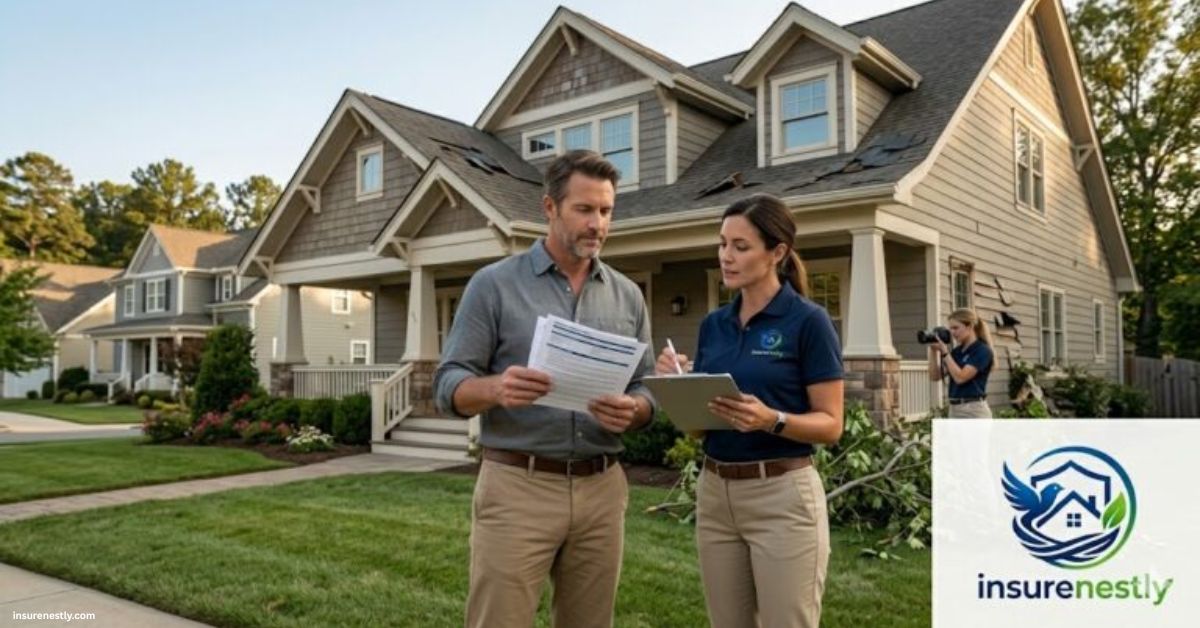
Filing a claim on a high risk home insurance policy works mostly like a regular policy, but it can take more time because of stricter reviews. Knowing the steps ahead of time helps you stay prepared and avoid common mistakes during a stressful situation.
Step by step claims process
| Step | What Happens |
|---|---|
| Report damage | Contact insurer |
| Document losses | Photos and evidence collected |
| Claim review | Insurer evaluates claim |
| Property inspection | Damage assessment completed |
| Settlement decision | Claim approved or denied |
Common reasons claims may be delayed
2024 U.S. Property Claims Satisfaction Study, the average time from reporting a claim to completing repairs is now 23.9 days more than 6 days longer than what was recorded in 2022. For claims related to catastrophic events like hurricanes or wildfires, that average jumps to 34.2 days. Customer satisfaction with the claims process has dropped to its lowest level in 7 years as a result. Standard claims typically settle within 30–60 days, but complex high risk property claims can take months.
Source: J.D. Power 2024
Common Mistakes Homeowners Should Avoid
Many homeowners make simple mistakes that push their insurance costs higher or create problems when they need to file a claim. Avoiding these errors can save you money and give you better protection in the long run.
Mistakes that can increase insurance costs
- Underinsuring the home: Choosing coverage that is too low to rebuild your house leaves you paying big out of pocket costs after a loss.
- Ignoring maintenance issues: Letting the roof, wiring, or plumbing get worse makes insurers see higher risk.
- Choosing coverage based only on price: The cheapest policy often skips important protections you may need later.
- Failing to update policy information: Not telling your insurer about renovations or changes can cause claim problems.
- Half of all U.S. homeowners surveyed by J.D. Power in 2024 experienced a premium increase initiated by their insurer within the past year and many were caught off guard because they had not reviewed their policy. Those with excellent credit pay an average of $2,329/year, while those with poor credit pay nearly double at $4,638/year a difference of over $2,300 annually simply based on credit score.
Cheapest policy vs comprehensive protection
| Cheapest Policy | Comprehensive Protection |
|---|---|
| Lower premium | Broader coverage |
| More coverage gaps | Better financial protection |
| Higher out of pocket risk | Greater peace of mind |
Conclusion
High risk home insurance can help protect properties facing unique challenges like older homes, risky locations, or past claims. It gives homeowners a way to stay covered when standard policies fall short. Make sure you clearly understand your coverage limits, exclusions, and deductibles before buying. Compare multiple policies carefully and review your coverage every year as your property changes. Taking these steps can save you money and give you better peace of mind.
Premiums increased in 95% of U.S. ZIP codes between 2021 and 2024, and in one third of ZIP codes they rose by more than 30%. The sharpest state level increases were in Utah (59%), Illinois (50%), Arizona (48%), and Pennsylvania (44%).
Disclaimer
This article is for informational purposes only and is not insurance, legal, or financial advice. Insurance rules differ by state. Always consult a licensed insurance agent or professional for advice specific to your situation.
FAQs
How can I lower my high risk premiums?
Start with the changes that give the biggest return. Replacing an old roof saves 10% to 20% on your annual premium on average, with some homeowners saving up to 40% depending on their state and carrier. Installing a monitored security system cuts premiums by 5% to 20%, saving up to $300 per year. Raising your deductible from $1,000 to $2,500 saves $230 to $408 per year on average. The biggest single saving comes from shopping carriers — homeowners who switched in 2025 saved an average of $928 per year. Also check your CLUE report annually, since incorrect claim records can inflate your premium without your knowledge.
What to do when no one will insure you?
You have three options. First, apply to your state FAIR Plan as of October 2024, these operate in 33 states and cannot legally turn away qualifying applicants. Second, contact the Excess and Surplus lines market, which now covers roughly 16% of home insurance policies in high-risk states like California, Florida, and Texas, up from just 2% in 2023. Third, fix the underlying issue directly replacing an old roof or updating wiring can move you back into the standard market within one to two policy cycles. An independent agent with access to both admitted and non-admitted markets is the fastest starting point.
Why would I be denied homeowners insurance?
Insurers often deny coverage due to a history of multiple claims, very old home systems, poor maintenance, or living in disaster prone areas. High crime locations, vacant properties, or certain dog breeds can also cause denials. They review your claims record, credit, and property condition carefully. Understanding these reasons helps you address the problems and reapply later.
What not to say to home insurance?
Avoid saying anything that is not accurate about your home’s condition, past claims, or changes you made. Do not downplay maintenance issues or hide renovations. Be honest about how the property is used for example, if it is sometimes vacant. Misleading information can lead to denied claims or policy cancellation later. Stick to clear facts when speaking with insurers.
What devalues a house the most?
Structural problems like foundation issues, outdated electrical wiring, and aging plumbing devalue a house the most for insurance purposes. An old roof in poor condition also hurts insurability badly. Other big factors include poor overall maintenance and building materials that are not durable. These issues raise risk and often lead to higher premiums or coverage problems.

Hi, I’m Shumail, an independent insurance researcher and content writer. I research different insurance topics and explain them in simple and easy language so that general readers can understand them better.
I am not an insurance agent, broker, lawyer, or service provider. I do not sell any insurance products or offer any financial services. The information shared on this website is purely for educational and informational purposes only.
My goal is to help people understand insurance concepts, policies, and basic guidelines in a clear and simple way through well-researched content.